Adaptive Epistemologies and Neo-Wilds — Chapter 06
Adaptive Epistemologies and Neo-Wilds
Chapter 06
Models
A History and Treatise
I trace the history of fluvial modeling in this chapter because it is the history of my own methods. The physical models I have built and worked with, at LSU, at the Harvard Graduate School of Design, at the University of Virginia, descend directly from the institutional and epistemological traditions established at Vicksburg, Delft, Grenoble, and Chatou over the past 150 years. They share a material logic, water moves over constructed terrain, sediment self-organizes according to flow velocity, and the behavior of the model is observed, measured, and used to inform propositions about landscapes at larger scales. What departs is the purpose. The modeling cultures documented here were built to predict and control, to make rivers behave as their models said they should. The work I do with physical models is built to discover what cannot be predicted, to encounter, through material engagement with dynamic systems at experimental scale, principles of interaction that no pre-programmed model could have specified in advance. This chapter tells the story of the tradition I inherit and the point at which I depart from it.
Rivers, Models, and the Problem of Prediction
Fluvial geomorphology, the study of how water sculpts and reorganizes the Earth’s surface, is the primary methodology for engineers, planners, and designers to understand rivers as dynamic systems (Oxford Bibliographies 2025). The term fluvial, from the Latin fluvius (river), has been in use since the fourteenth century, but the idea that rivers could be reliably modeled through abstraction, scaling, and simulation to predict behavior, is a recent development that has emerged over the past 150 years.
Fluvial modeling has never been a purely scientific project as it is coupled to socio-technical imperatives of flood protection, stabilizing navigation corridors, generating energy, and meeting environmental regulations. The Seine, Mississippi, and Rhine are not just large rivers, they are infrastructural backbones whose behavior has been repeatedly problematized, analyzed, and re-made through models. Historical floods on the Mississippi, the long urbanization of the Seine basin, and the intensive engineering of the Rhine as a pan-European trade route each produced characteristic modeling cultures and institutional ecologies.
The term fluvial modeling has shifted over time. Early models consisted of conceptual descriptions and empirical rules drawn from field observation. By the mid-twentieth century, large physical, hydraulic models, concrete landscapes with controlled inflows that produce varying roughness coefficients became emblematic of a historical experimental ethos. Today, numerical models based on the St. Venant and shallow water equations, landscape evolution models, and even deep learning architectures are standard tools for forecasting flood risk, sediment transport, and water quality (Saint-Venant 1871; EOLSS 2002; Coulthard et al. 2002; Tucker and Hancock 2010; Janbain et al. 2023).
This chapter traces that trajectory with a particular focus on three cases, the Mississippi, the Seine, and the Rhine, and on the institutions that became engines of modeling innovation including Sogreah/Artelia in Grenoble, the U.S. Army Corps of Engineers’ at the Hydrologic Engineering Center (HEC), Delft Hydraulics/Deltares in the Netherlands, and EDF’s Laboratoire National d’Hydraulique at Chatou. It also foregrounds an important methodological shift that moves from fieldwork to the laboratory to the digital.
Scale Model, Scour at the Foot of the Jons Dam, 1930–1935
Public domain.
From Descriptive Rivers to Quantitative Fluvial Science
Until the mid-twentieth century, river science was primarily descriptive, cataloguing form and inferring history rather than predicting change. The quantitative revolution in fluvial geomorphology started in the 1950s and marked a decisive break. Luna Leopold, M. Gordon Wolman, and John Miller’s, Fluvial Processes in Geomorphology (1964), synthesized hydraulic theory, systematic field measurements, and laboratory experiments into a process-based framework for understanding channel form and adjustment (Leopold, Wolman, and Miller 1964; Leopold 2010; Wolman 2010).
Leopold’s work on hydraulic geometry linked channel width, depth, and velocity to discharge through power law relationships, creating an elegant expression of how channels adjust to flow regimes (Leopold, Wolman, and Miller 1964). Wolman’s research on floodplain construction, sediment transport, and the geomorphic significance of floods of different magnitudes reframed rivers as systems defined by stochastic events and thresholds rather than equilibrium (Wolman 2010; Church 2004). In tandem, this research repositioned rivers as dynamic, self-adjusting systems governed by measurable processes.
This quantitative turn was more than academic refinement as without physically grounded, process-based descriptions, scaled physical models and numerical schemes would have lacked legitimacy. The shift from narrative description to measurable, testable processes enabled the emergence of large hydraulic laboratories and computational modeling frameworks. It reframed rivers as systems whose future states could, at least partially, be predicted.
Theodor Rehbock, Hydraulic Engineering Laboratory, Karlsruhe, 1899–1901
Public domain.
Principles of Hydraulic Similitude
Physical hydraulic models rest on the idea that a smaller, controlled system can reproduce the essential behavior of a larger river or structure if key dimensionless parameters are preserved. Froude and Reynolds numbers, geometric scale ratios, and roughness scaling are manipulated to ensure that gravity, inertia, and viscous forces are represented appropriately (Utah Water Research Laboratory 2025). In practice, perfect similitude is rarely achievable as the properties of water do not scale, and processes such as sediment transport, vegetation drag, or air entrainment often cannot be represented faithfully at reduced scale. Nonetheless, physical models became indispensable for visualizing three-dimensional flow fields, testing hydraulic structures, and communicating complex phenomena to non-specialists.
From the 1920s onward, national laboratories emerged whose remit was deeply tied to existential infrastructural projects. Delft Hydraulics (Waterloopkundig Laboratorium) was founded in 1927 in direct response to the Zuiderzee Works and the design challenges of the Afsluitdijk dam and causeway. By the early 1950s it was operating the large outdoor “de Voorst” facility for estuary-scale models of the Delta Works and major navigation junctions (Waterloopkundig Laboratorium 2025). In France, hydraulic laboratories in Toulouse and Grenoble were closely tied to hydropower development, focusing on turbines, penstocks, and the principles of similitude (IMFT 2025; Artelia Laboratory 2025). EDF’s LNH at Chatou, established in 1946, extended this tradition with large hydraulic models and wind tunnels for river, coastal, and energy-related hydraulics (EDF Lab Chatou 2022).
Physical models thus arose not as neutral scientific instruments but as techno-political devices for making extremely large infrastructural projects thinkable, testable, and publicly legible.
Mississippi River Basin Model — Data and Computer Room
USACE / HAER. Public domain.
Modeling Laboratories
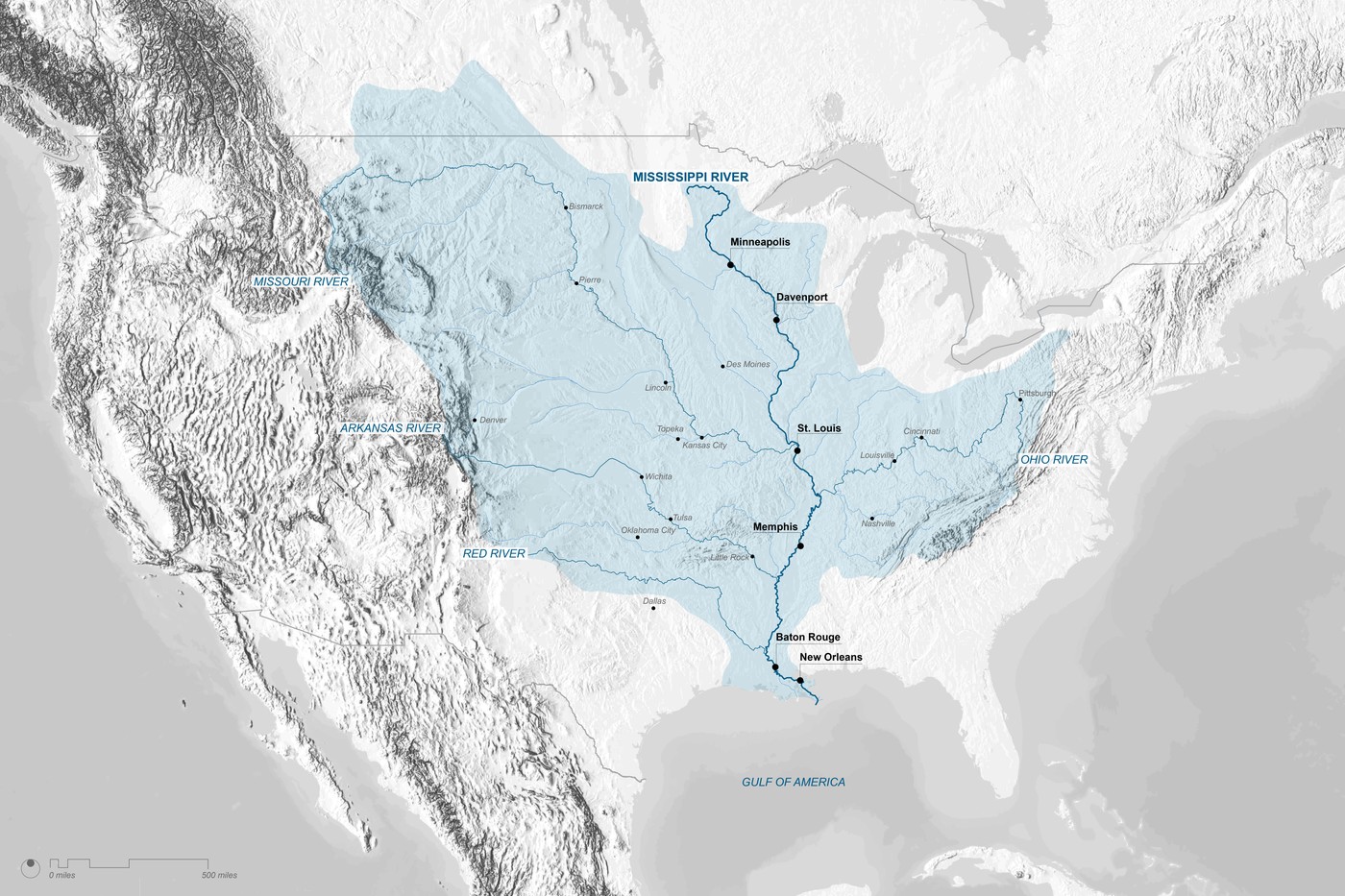
Figure 2Mississippi River Watershed
The Mississippi-Missouri drainage basin — 3.2 million km², 31 US states, 2 Canadian provinces. The watershed that the Mississippi River Basin Model was built to simulate.
The Mississippi River Basin Model (MRBM): Field to the Lab
The Mississippi River Basin Model condensed several decades of argument inside the Corps of Engineers over what counted as valid knowledge of rivers. Until the late 1920s, river regulation within the Corps was understood primarily as fieldwork with long apprenticeships on levees and revetments, a slow accretion of practical experience, and a dense mesh of local relationships along the banks of the Mississippi and its tributaries (Robinson 1992; O’Neill 2006). In this field-based epistemology, survey parties, levee inspectors, and district engineers accumulated knowledge through daily and seasonal encounters with the river by tracking water levels, bank failures, sand boils, and the behavior of particular reaches over time. This practice was intensely localized where district offices cultivated ongoing relationships with planners, town officials, levee boards, and port authorities with flood management emerging from negotiation and habit rather than calculation (Shallat 1994; O’Neill 2006).
When proposals surfaced in the 1920s for a national hydraulic laboratory that would investigate rivers through scale models, many senior officers treated them as a direct threat to this culture of expertise from embodied experience. The conflict is in a 1926 statement by Secretary of War Dwight W. Davis, drafted in consultation with senior Corps staff. Davis wrote that “the art of river regulation and control has heretofore been developed principally by practical experience in the solution of problems on a large scale” and that field experience “is undoubtedly of much greater value than laboratory experiments could possibly be,” since “the application of principles evolved in the laboratory to the solution of practical problems in the field must be difficult and uncertain” (Davis 1926, quoted in Robinson 1992, 278–79). A year later, Chief of Engineers Edgar Jadwin reiterated that problems such as Mississippi flood control “cannot be solved in a laboratory” (Robinson 1992, 278). Models were viewed, at best as didactic toys, at worst distractions from real engineering.
Even as this resistance hardened inside the Corps, a counter-movement was gathering momentum. Civil engineer John R. Freeman, who had toured European hydraulic laboratories in Dresden, Karlsruhe, and Delft was convinced that American rivers required comparable experimental infrastructure (Sánchez-Dorado 2019). In 1925 he endowed a traveling fellowship through the American Society of Civil Engineers so that young American engineers could study abroad, and he lobbied for a national hydraulic laboratory under the Bureau of Standards with strong support from Secretary of Commerce Herbert Hoover and several professional societies (Robinson 1992; Sánchez-Dorado 2019). The initial proposal sited the laboratory in Washington, D.C., but Jadwin countered in Congressional testimony that any such facility should be located on the Mississippi, where it could directly serve river work. The political debate over location and control set the stage for a compromise that would bind laboratory modeling tightly to the Mississippi River and Tributaries Project.
The Great Mississippi Flood of 1927 turned this unresolved epistemic dispute into an urgent institutional problem. The catastrophe exposed the limitations of a patchwork levee system coordinated largely through local field offices and revealed the need for basin-scale planning (Shallat 1994; O’Neill 2006). The Flood Control Act of 1928 not only authorized a comprehensive Mississippi River and Tributaries (MR&T) program, it also included explicit support for a federal hydraulic laboratory dedicated to the river system (Robinson 1992). In 1929 the Corps formally established the Waterways Experiment Station (WES) at Vicksburg, Mississippi, as its principal hydraulics research facility, land on Durden Creek was acquired in 1930, making WES the first federal hydraulics research station in the United States (Cotton 1979; Fatherree 2004).
Herbert D. Vogel, a German-trained hydraulic engineer, became the first director of WES. Early work was improvised and intensely experimental. The first Illinois River model was famously carved into the ground with a grapefruit knife but Vogel and his staff rapidly professionalized the operation, moving from crude earth cuts to carefully instrumented concrete flumes and fixed-bed models (Vogel 1961, quoted in Fatherree 2004, 11–13). New Deal public works and the expanding MR&T program funded projects and poured resources into Vicksburg, and by the late 1930s WES was conducting research for every Corps division on dams, spillways, navigation channels, and coastal structures (Cotton 1979; Fatherree 2004). The laboratory had become a central node in a new regime of hydraulic knowledge, still grounded in river hydraulics, but increasingly mediated through carefully scaled channels in concrete halls.
It was within this newly consolidated laboratory culture that the Mississippi River Basin Model was conceived (ASCE 2025). In 1943, Chief of Engineers Eugene Reybold proposed an unprecedented, integrated physical model that would encompass virtually the entire Mississippi River basin (Robinson 1992). Construction began near Clinton, Mississippi, in 1947. Built largely by German and Italian prisoners of war during World War II and completed by civilian crews after 1946, the model ultimately occupied about 200 acres and replicated roughly 15,000 miles of river channels and tributaries representing around 41 percent of the land area of the contiguous United States (Robinson 1992; Cheramie 2011). Technically, the MRBM embodied the state of hydraulic similitude practice at mid-century, using a horizontal scale of 1:2,000 and a vertical scale of 1:100, an intentional distortion that amplified relief and reduced the effect of surface tension in the shallow model flows (USACE 1970; Cheramie 2011).
The basin surface was cast as modular concrete panels shaped from surveyed topography to reproduce the main stem, major tributaries, floodplains, and key infrastructural elements. Surface frictions were simulated through embedded metal plugs and wire mesh to represent different land covers and vegetation densities. A network of watchtowers, gauges, and control buildings allowed engineers to manipulate inflows, reservoir releases, and storm hydrographs in real time (Robinson 1992; Fatherree 2004). A system of pumps and sumps recirculated water, enabling events that spanned weeks or months in the river to be compressed into hours or days in the model.
As a practical engineering tool, the MRBM quickly justified its enormous cost and complexity. Portions of the model were operational by 1949 and during the April 1952 Missouri River flood, rapid simulations on the basin model provided critical forecasts that guided levee raises and evacuations, later credited with preventing substantial damages (Robinson 1992, 291–92). Over the following decades the model was used to test the effects of proposed reservoirs, levee alignments, cut-offs, and bank stabilization works, as well as to reproduce and analyze historic floods. For engineers such as Margaret Petersen, who worked at WES in the late 1940s, the model offered an irreplaceable means to experiment with complex interactions by tangibly changing levee heights, roughness, or dam operations one variable at a time in a way that isolated effects in a system as intricate as the Mississippi River (Petersen 1997, Sánchez-Dorado 2019, 138).
Yet the model’s significance exceeded its technical performance. Kristi Cheramie argues that from the elevated watchtowers at Clinton, for the first time it was possible to comprehend the Mississippi watershed as a single visual and operational field, “the entire drainage basin all at once,” complete with the chain reactions set in motion by local interventions far upstream (Cheramie 2011). The MRBM turned the river system into a manipulable, concrete terrain where hydrologists, officers, and visiting politicians could see the consequences of an upstream cut-off, a new dam, or a raised levee propagated across hundreds of miles in accelerated time. In practice, the abstraction of the watershed to a controllable model created a new design space, the basin as laboratory.
This re-centering of authority had profound political and epistemic effects. The MRBM became the de facto arbitration space for large-scale flood control strategies, rather than field officers debating local knowledge against district or division plans, levee boards and elected officials increasingly traveled to Clinton to watch their proposals run on the model and to witness the Corps’ prescribed scenarios (Cheramie 2011; Robinson 1992). Over time, a feedback loop emerged and the Mississippi River was expected to conform to the well-behaved hydraulics of its scaled counterpart where design interventions were tuned until the model displayed an acceptably stable, navigable, and safe river.
Measured against the Corps’ mandate to guard the protection of human settlements and the maintenance of navigation, this shift from field-based empiricism to laboratory modeling yielded spectacular results. WES and the MRBM enabled a coordinated, basin-wide approach that could test configurations impossible to prototype in situ, substantially enhancing the capacity to standardize levee heights, regulate reservoirs, and reduce overt flood risk (Fatherree 2004; O’Neill 2006). At the same time, heterogeneity across the watershed was lost with local observational practices and community knowledge that had previously shaped flood response subordinated to model outputs. The river’s diverse ecologies, the wetlands, backswamps, seasonal floodplain forests that were recoded in the model as roughness coefficients and storage volumes, reinforcing a narrow performance metric that focused on navigation and property protection (Shallat 1994; O’Neill 2006).
In design terms, the MRBM created a new, synoptic, and an experimentally rich way of thinking of the river as a continuous infrastructure, a “fully designed river” (O’Neill 2006). But this affordance also naturalized a techno-bureaucratic vision in which the messy, contingent, and politically contested character of the Mississippi was flattened into a single, rationalized landscape. The model becomes a hinge in the history of fluvial modeling, a moment when representational power shifted decisively from dispersed field practices toward centralized, model-based forms of control, achieving new forms of safety and predictability while foreclosing ways of living with a dynamic river.
Nicholas de Monchaux traces the trajectory that the MRBM exemplifies (de Monchaux 2025). From the Panama Canal lockhouse, where synchronized motors linked a physical model to the landscape it controlled and the model was adjacent to the territory, visible from the same vantage, to naval fire-control systems that moved the model into the ship’s bulkheads, to the SAGE air defense network that relocated simulation into windowless bunkers, to contemporary algorithms that operate entirely within enclosed computational architectures, de Monchaux identifies a persistent pattern. The more powerful a model becomes in shaping reality, the more closed to view it becomes. The MRBM sits squarely within this trajectory, a model that claimed to represent the Mississippi while systematically enclosing it in concrete channels that foreclosed what the river could reveal. The geomorphology tables developed at REAL and UVA deliberately reverse this movement. The model is physically present, materially engaged, open to surprise. Its sensing apparatus makes the territory’s computation legible rather than replacing it with a digital surrogate. Where de Monchaux’s trajectory moves the model inward, away from the landscape it shapes, this practice moves it back out, into material engagement with the processes it claims to represent, where the territory can exceed the model’s assumptions and that excess becomes the finding.
My entry into this modeling lineage occurred inside the MRBM’s own territory. As a faculty member at LSU’s Robert Reich School of Landscape Architecture from 2005 to 2014, I worked within the Mississippi River basin that the MRBM had been built to manage, the same river system, the same coastal dynamics, the same institutional landscape of the Corps of Engineers, levee boards, and sediment budgets. Louisiana’s accelerating coastal land loss is the contemporary expression of the MRBM’s epistemic limitations, the model that made the basin legible as a single controllable system also foreclosed the ecological complexity, the wetlands, the seasonal floodplain forests, the sediment-dependent marshes, on which the coast’s survival depended. I did not discover the MRBM’s cautionary tale from a library. I discovered it from standing in coastal Louisiana and watching the consequences of a modeling culture that had recoded living landscapes as roughness coefficients.
The geomorphology modeling research conducted at the Responsive Environments and Artifacts Lab at the Harvard Graduate School of Design (2014–17) and subsequently at the University of Virginia (2017–present) positions itself within, and deliberately against, this modeling genealogy. The EmRiver geomorphology table deployed at both institutions shares a material logic with the MRBM, water moves over synthetic terrain, sediment self-organizes according to flow velocity, and the behavior of the model is observed, measured, and used to inform territorial propositions. But the epistemological commitment is inverted.
Embedding GIS data directly into the design model turned the model from a static picture into a structured database that can be queried and simulated. The territory therefore becomes an instrument of inquiry rather than a record of fact. Changing the database produces different hypotheses about how the landscape will behave, and the landscape’s response to construction refines those hypotheses in turn. The model is not confirming a prediction. It is generating the terms of a conversation with the site.
Where the MRBM sought Froude scaling and Reynolds number correspondence, precise mathematical relationships establishing that behavior in the model predicts behavior in the river, the geomorphology table work deliberately abandoned this convention. The table was not a scaled replica of any particular landscape. The presumed scale was illustrative and diagrammatic rather than establishing linear or proportionate relationships with real-world conditions. The table was conceived as its own environment, with its own elements of novelty and surprise, a generative space rather than a prediction engine.
This reframing had direct methodological consequences. Rather than using the model to predict outcomes in specific sites, the table was used to discover principles of interaction between flow, sediment, and designed intervention. When Kinect depth cameras failed to resolve thin depositional layers in the Sedimachine precursor experiments at LSU (2012), the failure was not treated as an equipment problem but as a research direction, directing subsequent development toward ultrasonic range finders and image analysis capable of capturing phenomena at different resolutions. When the robotic sediment gates at REAL choreographed deposition through temporal sequences of opening and closing rather than fixed channel geometry, the discovery was not a technique for replicating that choreography in a real river but a principle, that landscape form can be approached as the outcome of designed operations rather than the specification of a fixed end state. This is the lesson the MRBM’s concrete Mississippi could not teach, because its architecture required the river to conform to the model, rather than the model to remain open to being surprised by what the river does.
I selected plexiglass because its smooth, transparent surface lets the territory reveal its own flow dynamics from above and below, and its low friction isolates the phenomena I seek to know. Wood would have absorbed moisture, an opaque panel would have hidden the process, and a rough surface would have mixed flow with texture. The material choice enacts a methodological commitment. A simple, controlled system makes visible the relationship between flow conditions and deposition that a more complex apparatus would have obscured. The plexiglass becomes the territory’s skin, recording its own behavior, and where patterns diverge from expectations, the divergence is information, not error.
Sedimachine preceded the theoretical vocabulary that later named its objects as flow-modifiers. The prototype existed before the discipline had language for what it was doing, a material proposition that reshaped how territorial agency could be conceived, visible in the work years before it was visible in the writing.
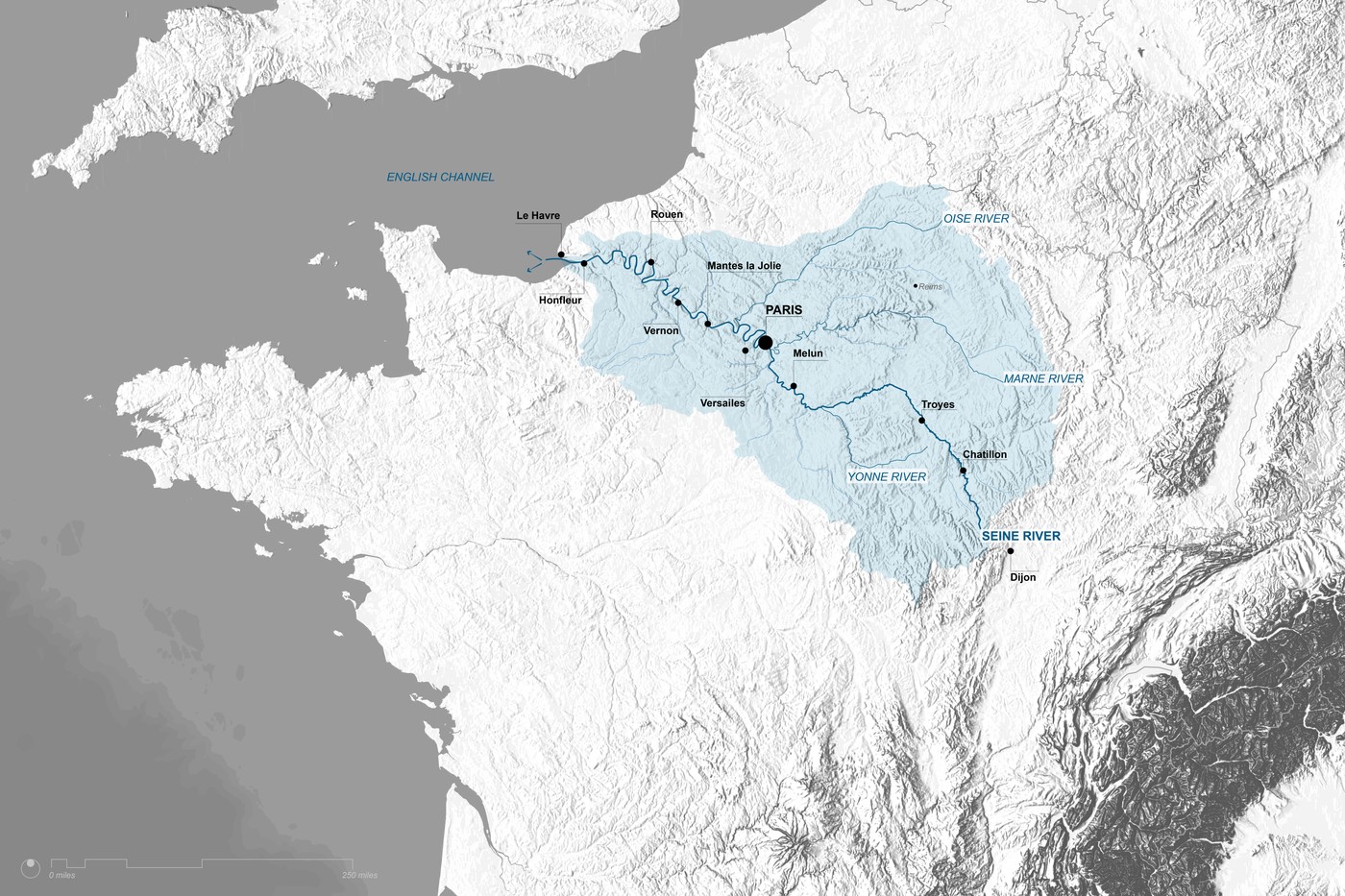
Figure 3Seine River Watershed and Estuary
The Seine drainage basin and estuary at Le Havre — site of the Neyrpic and Sogreah hydraulic modeling laboratories.
The Seine: Long Anthropogenic Histories
Compared to the Mississippi, the Seine’s modeling history is deeply entangled with slow, cumulative anthropogenic modification. Over at least a millennium, the basin has been progressively engineered through ponds, mills, diversion channels, navigation works, and storage reservoirs, largely in service of provisioning and protecting Paris (Lestel 2020; Seine Wikipedia 2025). Locks installed in the nineteenth century deepened the urban reach and transformed shallow sandy banks into a controlled navigation channel (Britannica 2025). Flood control reservoirs on the Yonne, Marne, Aube, and upper Seine, built from the mid-nineteenth century onward, added another layer of hydraulic regulation (Seine Wikipedia 2025).
This long pre-modeling history, now being reconstructed via efforts such as the ArchiSeine historical GIS, provides a unique testbed for model validation, numerical reconstructions must grapple with legacy structures, altered sediments, and incremental changes in channel geometry over centuries (Lestel 2020).
Institutionally, the Seine became a key site for EDF’s Laboratoire National d’Hydraulique at Chatou. LNH, and later the joint Laboratoire d’Hydraulique Saint-Venant, not only constructed physical models but developed the TELEMAC system, a suite of hydrodynamic and water-quality codes including TELEMAC-2D for shallow water flows and SUBIEF for reactive transport (WIT Press 1996; Saint-Venant Lab 2025). TELEMAC was applied to model heavy metal transport along the Seine, coupling flow dynamics with contaminant fate under complex urban loading (WIT Press 1996).
In parallel, researchers began to deploy both simplified 1D and detailed 3D hydro-sedimentary models to understand sediment resuspension from ship wakes and navigation in the lower Seine, using Navier-Stokes-based solvers and field validation (Seine Ship Wake Study 2010). Most recently, deep learning architectures—GRU, BiLSTM, and hybrid CNN-BiLSTM-Attention networks—have been used to reconstruct historical time series of electrical conductivity, dissolved oxygen, and turbidity from limited monitoring data in the lower Seine (Janbain et al. 2023). These models target not only ecological objectives but highly publicized goals such as making the river swimmable for the 2024 Olympics (Seine Wikipedia 2025; Planetizen 2025).
Thus, the Seine’s modeling history moves from long-term, largely unmodeled engineering to physicochemical simulations anchored in environmental regulation and public health, a shift from navigation and flood control to water quality as primary modeling drivers.
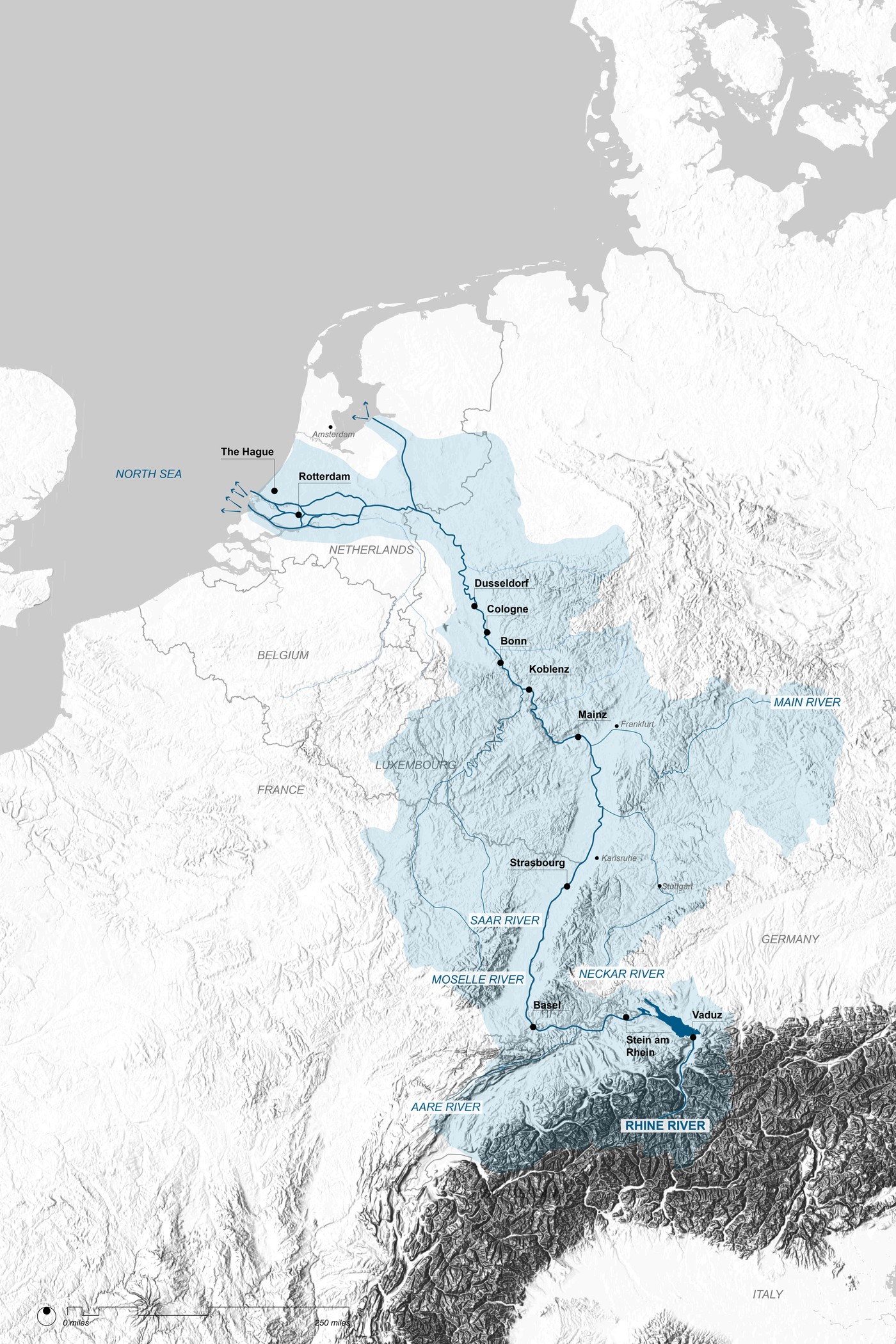
Figure 4Rhine River Watershed and Delta
The Rhine delta and Netherlands flood management system — site of the Delft Hydraulics Laboratory and the Dutch modeling tradition.
The Rhine: Hybrid Modeling Cultures
The Rhine’s 15,000-year fluvial history is marked by shifting meander generations and transitions from braided to meandering patterns, overprinted by intensive human modification since at least the Neolithic (Fluvial History Upper Rhine 2002). From circa 1100 CE onward, deforestation, channel engineering, land reclamation, and later industrialization drastically simplified and confined the channel and eliminated an estimated 85 percent of historical floodplain area (Fluvial Anthroposphere 2025; Wetlands International 2025; Harvard Magazine 2006). The river has accordingly become emblematic of the “fluvial anthroposphere,” where human activities function as primary geomorphic agents (Fluvial Anthroposphere 2025).
Modeling efforts on the Rhine reflect this complexity and its status as an international waterway. Sogreah’s CARIMA code provided the foundation for the Hydrodynamic, Numerical Model of the River Rhine (HN-Model Rhine), which covered a 500km reach from Iffezheim to Lobith and was calibrated against major flood events to support flood management and regulation (Cunge 2002; WIT Press 2002). At the same time, Delft Hydraulics (now Deltares) developed morphological models such as DVR and later 6th-generation tools within the D-HYDRO Suite, used to assess fairway maintenance, sediment extraction, and the impacts of large-scale interventions like the Dutch “Room for the River” program (Deltares 2012; Deltares 2015).
On the physical side, the Bundesanstalt für Wasserbau (BAW) in Germany constructed a 1:60 mobile-bed model of the “Jungferngrund” gravel bank near Oberwesel to study regulation measures and sediment transport in a complex, partially rock-bounded reach (BAW 2025). The Jungferngrund model is explicitly embedded in a hybrid workflow where 3D numerical models are used for hydraulic pre-design and the physical model for testing morphological responses (BAW 2025). Complementary 1:40 models of induced bank erosion for sediment supply to the Old Rhine, developed collaboratively by Compagnie Nationale du Rhône, Deltares, and BOKU University, demonstrate similar hybrid strategies (Mosselman et al. 2014).
Other work couples remote sensing (e.g. SAR imagery) with numerical models to simulate the Rhine plume in the North Sea, again underlining the way in which the river is embedded in a larger coastald system (AMETSOC 2001). Taken together, these efforts exemplify a mature modeling culture where 1D-2D numerical models, reach-scal CFD, physical models, and satellite data are woven together to manage a highly engineered but still dynamic international river.
Sedimentological Model, Mont-Saint-Michel, 1997
Public domain.
Institutions as Modeling Ecologies
Across these rivers, a set of institutions repeatedly appear as crucibles for modeling innovation.
Sogreah/Artelia began as the hydraulic laboratory of Neyret-Beylier in Grenoble, rooted in turbine testing and hydropower design, and evolved into an independent consultancy in 1955 (SOGREAH History 2010; Artelia Laboratory 2025). Its early acquisition of an IBM 650 in the 1950s enabled engineers like Jean Cunge to become pioneers in computational hydraulics and systems thinking, producing models such as CHAR2 (1D sediment transport), CARIMA (hydrodynamics), and one of the earliest computational Mekong Delta models (Cunge 2010). Simultaneously, Sogreah developed distinctive physical modeling infrastructures such as the Port Revel ship handling lake and riverine models like the lower Mississippi Delta project (Port Revel 2025; Ardurra 2025).
The Hydrologic Engineering Center (HEC), embedded within the U.S. Army Corps’ Institute for Water Resources, pursued a different logic, the creation of standardized, publicly available software for federal and consultant use (HEC 2025). HEC-1 and HEC-HMS codified flood hydrograph methods, HEC-6 and later sediment and systems models provided widely adopted tools for scour, reservoir sedimentation, and linked reservoir-river systems (HEC-HMS 2025; HEC Model Classification 2025). HEC’s position inside a large federal agency shaped its emphasis on robustness, documentation, and regulatory applicability (e.g. FEMA floodway determinations).
Delft Hydraulics/Deltares grew from a national imperative—the Netherlands’ struggle against the sea and its rivers—and thus built capacity across the full spectrum of physical and numerical modeling for coasts, estuaries, and rivers (Waterloopkundig Laboratorium 2025; Deltares 2012). The outdoor de Voorst facility exemplified large-scale physical experimentation, while later morphodynamic and hydrodynamic codes extended that expertise into software platforms now used worldwide.
LNH Chatou and the Laboratoire d’Hydraulique Saint-Venant sit at the intersection of energy infrastructure and environmental hydraulics. Their TELEMAC system and associated research have been deeply shaped by EDF’s concerns with plant cooling, dam safety, and riverine water quality, with the Seine serving as both a testing ground and a public-facing case study (EDF Lab Chatou 2022; Saint-Venant Lab 2025; WIT Press 1996).
University laboratories—Toulouse’s IMFT, Grenoble groups, Colorado State, Utah State’s UWRL, Cardiff, among others—have meanwhile blended physical modeling, numerical method development, and basic research on river processes and landscape evolution (IMFT 2025; CSU Hydraulics 2025; UWRL 2025; Cardiff Meandering Study 2010; Tucker and Hancock 2010; Coulthard et al. 2002). Their work often pushes the theoretical and computational frontier—e.g., landscape evolution models or AI-based flood prediction—before those approaches diffuse into agency and consultancy practice (Modeling River History 2010; AI Urban Floods 2022; Janbain et al. 2023).
The design research laboratory within a professional school of landscape architecture occupies a distinct position within this institutional landscape. Neither a commercial consultancy producing transferable tools nor a federal agency standardizing methods for regulatory compliance nor a national laboratory stewarding critical water infrastructure, the UVA Geomorphology Lab, and before it, REAL at the Harvard GSD, uses physical modeling for purposes that none of the institutional genealogies above fully anticipated, the generation of design heuristics through material encounter with dynamic systems, what Bélanger (2015) calls “going live,” the shift from designing representations of landscapes to designing landscapes as living systems operating in real time.
The geomorphology table computes simultaneously in sediment-water dynamics and in digital sensing. The territory itself solves hydraulic problems. Water finds its path, sediment sorts by grain size, channels form and migrate. The sensors make that computation legible. The table is a material computer in the sense Lootsma named at PRS 5. The computing is already in there, in the physics of flow and deposition. What the digital sensing layer adds is not computation but readability, a way of attending to what the material has already worked out.
The REAL table is a synthetic site with its own material properties, not a scaled replica of the Mississippi River. It does not need to validate a real-world analogue to produce knowledge. It is a discovery engine, a system whose value lies in revealing principles of interaction between flow, sediment, and designed intervention that transfer across scales without requiring precise scalar correspondence. The table’s autonomous behavior, its capacity to surprise, is not a limitation of the apparatus. It is the point.
But if the model is a discovery engine whose value lies in producing outcomes that cannot be fully anticipated, then conventional documentation fails. A photograph captures a state. A report summarizes findings against predetermined criteria. Neither format is adequate to a system whose knowledge is produced through ongoing transformation. Indeterminate Futures (2021), developed with Xun Liu for the Venice Architecture Biennale, addressed this problem directly. Years of geomorphology table experiments were minted incrementally as NFTs on the Tezos blockchain, each 15 to 30 second increment a unique digital object, the archive growing throughout the Biennale as new experiments were conducted. The catalog of the exhibition was also the exhibition itself. The accumulation was the argument, that certain kinds of knowledge cannot be captured in a definitive representation but must be held in an archive that grows as the research produces more material and remains accessible as the questions the archive might answer evolve. This is what adaptive epistemology resembles at the scale of a research archive. Knowledge produced through ongoing action, accumulated incrementally, held in a form that does not foreclose future use by constraining the material to the interpretive frameworks available at the time of production.
The laboratory’s graphic language follows from this logic. Gradient-based plans communicate probability, tendency, and flux rather than fixed elevations, allowing the territory to be read as an ongoing process rather than a state to be achieved.
The years I spent working alongside civil engineer Clint Wilson at the LSU Coastal Sustainability Studio illustrate it precisely. Wilson and I never worked on the same models directly, but we were developing physical models in parallel within our respective disciplines, his in civil engineering, mine in landscape architecture, and engaged in ongoing conversations throughout those developments. Wilson, trained in the tradition that produced WES and HEC, built models to extract predictive patterns, scaling laws, transport rates, calibration data that could be validated against field measurements and applied to specific sites. I built models to discover emergent landforms, channel morphologies, depositional patterns, spatial relationships between flow and form that suggested how design might operate within systems that exceed prediction. We shared a material practice and a river system. What differed was what counted as knowledge. The divergence was not a miscommunication between disciplines. It was how different institutions, with different accountability structures, different definitions of rigor, and different relationships to the landscapes they study, produce different knowledge from parallel material engagement.
The BAW’s Jungferngrund model on the Rhine operates within a hybrid workflow, 3D numerical models for hydraulic pre-design, physical models for testing morphological responses, that is structurally parallel to the UVA Lab’s methodology, where computational analysis informs the parameters of physical experimentation and physical results redirect computational inquiry. The difference is purpose, BAW’s hybrid workflow serves navigational safety and sediment management on an engineered international waterway, the design research laboratory’s hybrid workflow serves the discovery of principles for how landscapes might be designed to accommodate, rather than resist, the dynamic behavior that the physical model reveals.
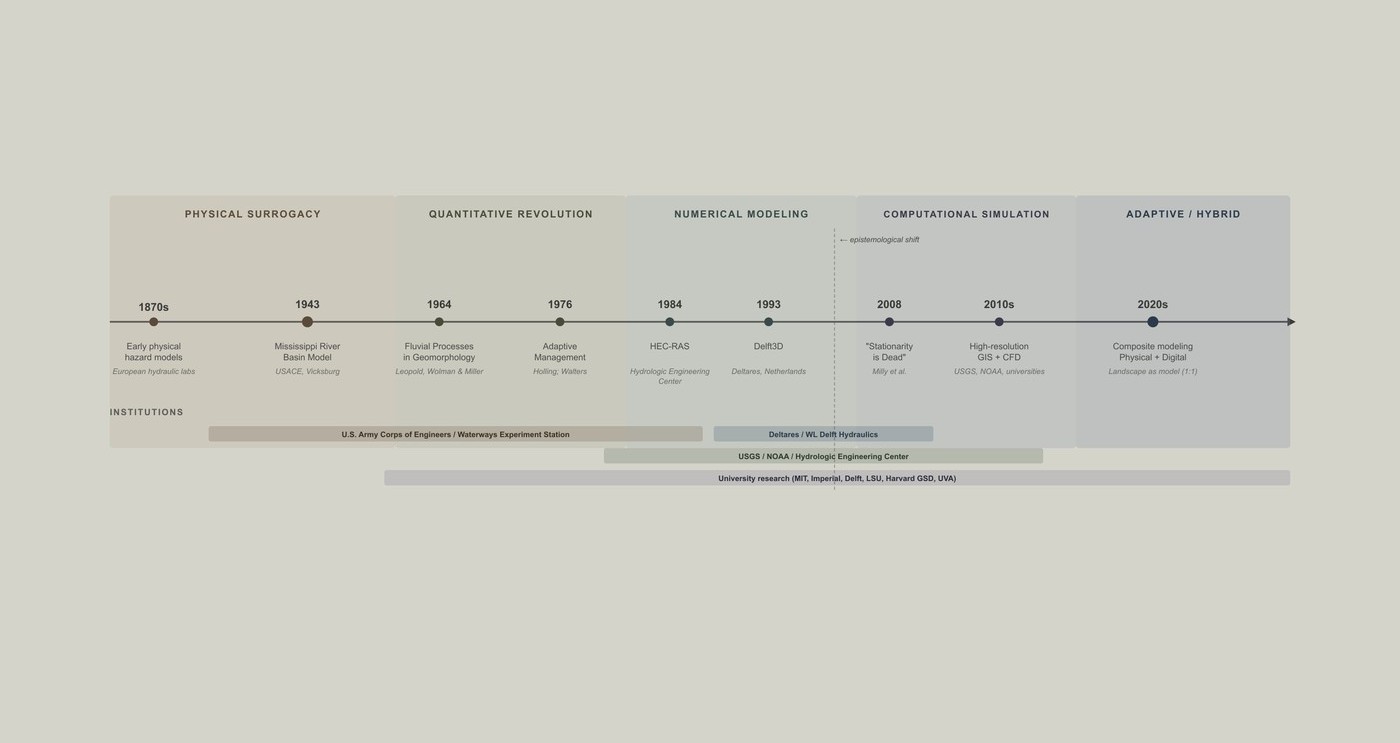
Figure 1Fluvial Modeling Paradigms — A History
Timeline of fluvial modeling from physical surrogacy through quantitative revolution to numerical simulation. Mississippi River Basin Model (1943), HEC-RAS (1984), and the turn toward adaptive computational modeling.
From Concrete to Code
The move from physical models to numerical computation is underpinned by the equations for open channel flow and sediment transport. The St. Venant equations (1871) provide 1D mass and momentum conservation for unsteady flow, their 2D depth-averaged counterparts, the shallow water equations, and full Navier-Stokes/RANS formulations underpin 2D and 3D CFD models (EOLSS 2002; Shallow Water Equations 2025). Early numerical models typically employed simplified forms such as kinematic or diffusion waves to remain tractable on limited hardware (EOLSS 2002). As computational power grew, more complete formulations became feasible.
1D models such as HEC-1, HEC-HMS, and HEC-6 remain indispensable for long-reach, long-duration simulations where computational efficiency is critical (HEC-HMS 2025; HEC 1D vs 2D 2019). The rise of airborne LiDAR and high-resolution DEMs enabled 2D flood models to flourish, providing detailed inundation mapping and better representation of complex overbank flows in both urban and rural floodplains (CDEMA 2025; Simon 2019). 3D CFD models, though computationally expensive, are now routinely used for reach-scale studies of meander bends, groyne fields, and local scour, often coupled to laboratory experiments for validation (Cardiff Meandering Study 2010; Lek Bottom Vanes 2024).
Landscape evolution models (LEMs) such as CHILD, CAESAR, and SIBERIA represent a further abstraction, they simulate coupled channel-hillslope systems over millennial timescales, integrating tectonics, climate forcing, and multiple grain-size sediment transport into a unified framework (Modeling River History 2010). They rely on efficient flow routing schemes, irregular meshes or high-resolution grids, and parameterizations of erosion, deposition, and vegetation effects (Tucker and Hancock 2010; Coulthard et al. 2002).
More recently, AI and machine learning techniques have been adopted both as stand-alone predictive tools and as components of hybrid modeling workflows. Logistic regression, decision trees, SVMs, K-nearest neighbors, and deep neural networks have been deployed to quantify urban fluvial flood susceptibility in catchments such as Darby Creek, Pennsylvania, while deep recurrent architectures have been used to reconstruct water quality time series in the Seine (AI Urban Floods 2022; Janbain et al. 2023). These approaches often treat the river as a high-dimensional input-output system, learning patterns from data rather than explicitly encoding physical processes, but can be embedded within physics-informed or hybrid frameworks.
Across these developments, physical models have not disappeared. Instead, they have been repositioned as high-resolution experimental platforms used to test specific interventions, probe fundamental processes, and generate data for numerical model calibration and validation (UWRL 2025; BAW 2025). Composite or hybrid modeling strategies—such as BAW’s combined CFD and Jungferngrund physical model—suggest a future where modeling ecologies deliberately mix concrete, code, and data (BAW 2025; UWRL 2025).
Mississippi River Delta — Landsat, 1976
NASA / USGS Landsat. Public domain.
Looking Forward in Fluvial Modeling (and for Design)
Looking across the Seine, Mississippi, and Rhine, a consistent pattern emerges. Modeling capacity develops in response to crisis. The MRBM arose from the 1927 flood, Dutch modeling from the existential threat of the North Sea, the Seine’s turn to AI-driven water quality reconstruction from regulatory targets and the public spectacle of Olympic swimming, the Rhine’s hybrid workflows from the need to reconcile navigation with restoration after centuries of channelization (ASCE 2025; Waterloopkundig Laboratorium 2025; Janbain et al. 2023; Deltares 2012). But the modeling cultures that crisis produces are shaped by the institutions that house them. Commercial firms like Sogreah emphasize transferable tools, federal centers like HEC prioritize standardization for regulatory compliance, national laboratories like Deltares steward critical water infrastructure, and universities push theoretical frontiers. Each institution produces not just different models but different epistemologies, different definitions of what counts as valid knowledge about a river.
What all of them share is that models encode the histories of intervention that preceded them. The Seine’s terraces, ponds, and weirs, the Mississippi’s levee systems, the Rhine’s shortened channels and lost wetlands are not merely boundary conditions. They are the cumulative outputs of earlier unmodeled design decisions that contemporary models must now digest (Lestel 2020; Harvard Magazine 2006; Fluvial Anthroposphere 2025). And across all three rivers, the central challenge is not model skill but the communication of uncertainty, how limitation, scale, and indeterminacy are represented to the engineers, policymakers, and communities whose decisions the models inform.
For design practice, this history offers a lesson that the modeling genealogy makes available but does not itself draw. The appropriate response to the MRBM’s failure mode, the river expected to conform to its concrete counterpart, is not a better model but a different epistemological relationship between model and territory.
The Sedimachine (2012), REAL (2014–17), and the UVA Geomorphology Lab (2017–present) each operate within this reframing. They inherit the physical modeling tradition, water over synthetic terrain, sediment self-organizing under flow, while departing from its representational claims. The table is not a scaled replica of any real river. It is a designed environment for encountering principles of sediment choreography that cannot be fully specified in advance. When the robotic sediment gates develop temporal sequences of opening and closing that produce deposition patterns no pre-programmed rule could specify, the discovery is not a replication protocol for a real river but a principle for how design might operate within systems that exceed prediction.
The NEOM consultation (2022–25) translates this principle to territorial scale. When GeoHECRAS hydrological modeling revealed that conventional channelization of the wadis surrounding The Line would require widths exceeding 200 meters with hardened concrete at velocities making ecological function impossible, the finding was a proof of concept. The alternative, routing water through reconceived wadi systems as holding areas, recharging aquifers, sustaining coastal brackish zones through fluctuating isohaline gradients, was an engineering necessity, not a design preference. The territory’s own hydrological dynamics made the adaptive proposition unavoidable. This is what the design research laboratory’s modeling methodology is built toward, not the prediction of outcomes but the discovery of conditions under which the landscape’s own dynamic intelligence becomes a design resource rather than a variable to be controlled.
For this dissertation, the history traced above is not background. It is genealogy. The geomorphology modeling research conducted at LSU, the Harvard GSD, and the University of Virginia descends directly from the modeling cultures established at WES, Delft, Sogreah, and Chatou, sharing their material logic (water over synthetic terrain, sediment self-organizing under flow), their institutional form (a laboratory within a larger institutional ecology), and their relationship to crisis (Louisiana’s coastal land loss is the contemporary Mississippi’s 1927 flood). What departs is the epistemological commitment, from prediction to discovery, from similitude to generativity, from the model that contains the river to the model that is designed to be exceeded by it.
Cheramie’s observation that the MRBM made it possible to comprehend “the entire drainage basin all at once”, synoptic comprehension as a new form of power, is also the argument that Chapter 01 develops in relation to adaptive epistemology, that the capacity to see the whole system simultaneously is both an epistemic achievement and an epistemic closure, foreclosing the local, the contingent, and the ecologically particular. The modeling genealogy traced here is the empirical foundation for that argument, and for Chapter 02’s claim that the stationarity assumptions embedded in predict-and-control modeling have been exceeded by the systems they were built to manage.
The Seine, the Mississippi, and the Rhine are co-produced landscapes in which physical and numerical models have become infrastructural actors in their own right. Future assemblages of wetware, sensors, algorithms, physical models, and human expertise, the “internet of ecologies” proposed for the NEOM consultation, the distributed NFT archive of geomorphology table documentation in Indeterminate Futures, the machine learning integration of the UVA lab’s autonomy gradient, are the next nodes in the modeling genealogy this chapter traces. Understanding that genealogy clarifies what is being inherited, what is being departed from, and what it means to design for systems that are, by definition, smarter than the models we build to understand them.
If the model is a site … an environment with its own dynamics that can be designed, observed, and learned from … then what is the relationship between the model and the territory? The model is not the landscape. But it is not a representation of the landscape either. What kind of knowing does this hybrid condition enable? Can the landscape itself become a model and can the territory function as its own instrument of inquiry?
These questions are not rhetorical. But before the landscape can become a model, the landscape must first become legible, and legibility is never neutral. The MRBM’s failure was not only that it sought control rather than discovery. It was that its sensing apparatus, the concrete channels, the fixed gauges, the human observers at watchtowers, had already decided what the river could reveal before the model ran. The instruments encoded the epistemology. What was not measured could not matter, and what could not matter could not be designed for. The wetlands recoded as roughness coefficients were not invisible through negligence but through an apparatus that had been built to see something else.
To design models that generate rather than foreclose is also to design the instruments through which territories become known. The choice of what to sense, where to place the sensor, what data structures to build, what phenomena to count as information, these are design decisions of the first order, not technical defaults. They determine not only what the model can see but what the territory can reveal. Chapter 7 examines the politics of that apparatus, the Technogeographies of Sensing through which the knowing of landscapes is structured before any model runs, and the neo-wild landscapes that emerge in the gaps of what has not been instrumented.
Engineers Examining the Mississippi River Basin Model