Adaptive Epistemologies and Neo-Wilds — Chapter 02
Adaptive Epistemologies and Neo-Wilds
Chapter 02
Adaptive Epistemologies
A Framework
Chapter 01 ended with the veil. Pierre Hadot names two ways of approaching it. The Promethean attitude tears the veil away, treating nature as a set of secrets to be extracted, mechanisms to be predicted and controlled. The Orphic attitude attends to it. Goethe called this “delicate empiricism,” an inquiry that learns by attending to the phenomenon rather than by forcing it to confirm a prior model (Hadot 2006). The infrastructure tradition is Promethean. It models, predicts, builds to enforce the prediction. The adaptive epistemology developed in this dissertation is an Orphic project conducted with Promethean tools. The computational sensing, the robotic infrastructure, the machine learning algorithms are Promethean apparatus. But the epistemological orientation in which they are deployed is Orphic. Attentive to what the system reveals rather than determined to make it confirm what the model predicted. That tension is the condition of practice at territorial scale.
This chapter develops a framework for adaptive epistemologies in landscape architecture, synthesizing theoretical foundations from evolutionary epistemology, enactivism, situated cognition, resilience theory, and cybernetics with the practice-based design research that runs throughout this dissertation. The theoretical traditions surveyed in the sections that follow are not the sources of this framework. They are the vocabularies through which a practice-focused approach generates a legible epistemology. The framework was generated by practice, by sensors that failed to resolve what they were measuring, by installations truncated by the gap between speculative design and institutional reality, by hydrological models that revealed their own inadequacy, by systems that reorganized in ways no prior model had anticipated. That practice is documented in the chapters that follow. What is claimed here asks to be held provisionally and tested against the evidence that comes after. The framework is named before the practice is shown because the reader needs the vocabulary before it can be grounded in the evidence.
Chapter 01 described the territorial condition. Prediction failing at scale, infrastructure succeeding into failure, baselines dissolving under directional change. The professional implications are immediate. If baselines are not stable, what does restoration mean? If the future cannot be reliably predicted, how can infrastructure be sized? If ecosystems are inherently unpredictable, what is the designer’s responsibility when interventions produce unintended consequences? These are not technical problems awaiting better data. They are epistemological problems that demand rethinking the relationship between knowledge and practice, between expertise and uncertainty, between design intention and emergent outcome.
hubbard brook experimental forest lter
From Evolutionary Epistemology to Adaptive Knowing
The Selection of Knowledge
The concept of adaptive epistemology has deep roots in evolutionary thought. Donald T. Campbell’s foundational essay “Evolutionary Epistemology” (1974) proposed that knowledge acquisition follows processes analogous to biological evolution, variation, selection, and retention. Just as organisms evolve through the selective survival of randomly generated variations, knowledge evolves through the selective retention of ideas, theories, and practices that prove adequate to the problems organisms face. Campbell’s “blind-variation-and-selective-retention” (BVSR) framework challenged the view that knowledge proceeds by systematic, rational accumulation, emphasizing instead the exploratory, experimental, and often serendipitous character of discovery.
James K. Feibleman’s Adaptive Knowing: Epistemology from a Realistic Standpoint (1977) extended this evolutionary framework in a direction that matters for design. Where Campbell emphasized the blindness of variation, Feibleman argued that knowledge acquisition is not a series of independent trials but a cumulative process in which each acquisition reshapes the conditions for the next. Past learning modifies the apparatus through which future learning occurs. Feibleman had already connected epistemological inquiry to ecological thinking in his earlier essay “Adaptive Responses and the Ecosystem” (1969), anticipating what would later be called resilience thinking. For this dissertation, his contribution is specific. The sensing infrastructure that has monitored a marsh for fifteen years does not begin each reading from scratch. Its accumulated history of calibration, protocol adjustment, and pattern recognition has restructured the instrument itself. Knowledge is not added to a fixed knower. The knower is reformed by what it has learned.
For design practice, this means that design failures are not errors to be eliminated but are essential to the evolutionary process, they provide the selective information that guides subsequent variation (Campbell 1974). An epistemology that treats failure as pathological rather than productive will systematically impede learning.
Situated Action and Contextual Knowledge
Lucy Suchman’s Plans and Situated Actions (Suchman 1987) introduced a crucial critique of cognitivist models of action into human-computer interaction and design theory. Against the view that intelligent action proceeds by formulating plans and then executing them, Suchman argued that action is fundamentally situated and improvised in response to the particularities of circumstances that cannot be fully anticipated in advance. Plans are not determinative programs that control action but are resources that actors consult and adapt as situations unfold. The Trukese navigator who responds moment-by-moment to wind, current, and wave does not follow a precomputed course but engages in continuous, skillful adjustment to present conditions and is a model of intelligence radically different from the European navigator’s reliance on instruments and predetermined waypoints.
Suchman’s insight challenges the assumption that design can be reduced to specification, the production of plans, drawings, and documents that prescribe how a landscape should be built and managed. If action is fundamentally situated, then specifications are at best provisional scaffolds that will necessarily be adapted, modified, and sometimes abandoned as implementation encounters circumstances that could not be anticipated. The “plan” for a neo-wild landscape is not a blueprint to be executed but a framework within which situated decisions must be continuously made by managers, sensors, algorithms, and the organisms and materials themselves. This does not diminish the importance of planning but reframes it, the plan is a resource for action, not a program that determines it.
The implications extend to knowledge production. Knowledge developed in one context may not transfer unproblematically to another. The hydrological dynamics of the Llobregat delta differ from those of the Mississippi delta, not merely in quantitative parameters but in their structural organization, their historical trajectories, and their entanglement with different social, economic, and political systems. Adaptive epistemology insists on the situatedness of knowledge and the recognition that what works here may not work there, and that learning must be continuous rather than once-and-for-all.
Embodied Cognition and Experiential Learning
The enactivist tradition in cognitive science, developed by Francisco Varela, Evan Thompson, and Eleanor Rosch in The Embodied Mind (Varela, Thompson, and Rosch 1991), offers a philosophical framework for understanding knowledge as emerging through embodied engagement with environments rather than through disembodied mental representation. Cognition, on this view, is not the manipulation of abstract symbols inside heads but the enactment of a world through sensorimotor activity. Organisms do not passively receive information from pre-given environments but actively bring forth the domains of significance through which they navigate. Knowledge is not stored in brains but is distributed across body-environment systems engaged in ongoing interaction.
This framework aligns with John Dewey’s pragmatist epistemology, which positioned inquiry as emerging from problematic situations encountered in practice and as oriented toward the reconstruction of experience that transforms those situations (Dewey 1938). For Dewey, thinking does not precede doing but is continuous with it, an orientation captured in the phrase “learning by doing.” Education is not preparation for life but is itself life, an ongoing process of growth through engaged experience. Dewey’s critique of “spectator theories” of knowledge, frameworks that position the knower as passive observer of a world that exists independently, anticipates the enactivist insistence on the constitutive role of action in cognition.
For landscape architecture, these frameworks suggest that design knowledge cannot be acquired solely through instruction, mediated analysis, or computational simulation. It requires direct engagement with materials, sites, and the temporal processes through which landscapes transform. The designer who has never experienced the physical labor of planting, the sensory qualities of different soils, the unpredictable dynamics of flooding possesses an impoverished knowledge relative to one whose understanding is grounded in bodily participation. This is not anti-intellectualism but a recognition that intellectual abstractions are productive only when they emerge from and return to embodied practice.
The slow robotics and persistent monitoring infrastructures developed in Chapters 10 and 11 extend this embodied engagement across temporal scales that exceed individual human experience. A sensor network that has monitored a marsh for fifteen years possesses a form of experiential knowledge which is encoded in data patterns and model parameters that newly arrived human managers lack. The infrastructure’s “body” is the assemblage of sensors, communications networks, and processing algorithms distributed across the landscape, and its “cognition” is the pattern recognition that emerges from continuous engagement with environmental dynamics. Adaptive epistemology must account for these machinic forms of embodied knowledge alongside human ones.
Systems Thinking, Resilience, and Complexity
C.S. Holling’s seminal paper “Resilience and Stability of Ecological Systems” (1973) introduced a distinction that has become foundational for adaptive environmental management, the difference between engineering resilience (the speed of return to equilibrium after disturbance) and ecological resilience (the magnitude of disturbance a system can absorb before shifting to an alternative stable state). Ecological resilience emphasizes persistence through change, the capacity of systems to reorganize while retaining essential functions and identity, rather than the maintenance of any particular equilibrium. Systems with high ecological resilience may fluctuate dramatically yet persist, systems with high engineering resilience may appear stable yet be vulnerable to threshold crossings that produce irreversible regime shifts.
The panarchy framework developed by Lance Gunderson and C.S. Holling (2002) extended resilience thinking across scales, modeling social-ecological systems as nested adaptive cycles operating at different temporal and spatial scales. Each adaptive cycle passes through four phases, rapid growth and exploitation (r), conservation and accumulation (K), release and collapse (Omega), and reorganization and renewal (alpha). The “front loop” from r to K is the slow, incremental phase of growth and stabilization, the “back loop” from Omega to alpha is the rapid phase of collapse and innovation. Panarchy emphasizes cross-scale interactions, small, fast cycles can trigger cascading effects in larger, slower cycles, while larger cycles provide memory and resources that enable recovery of smaller cycles after collapse.
The implications for design are immediate. Infrastructure designed to maximize stability (engineering resilience) may inadvertently reduce ecological resilience by eliminating the variability and disturbance through which systems maintain adaptive capacity. Levees that prevent small floods produce catastrophic failures when large floods overtop them. Fire suppression that eliminates frequent, low-intensity burns produces fuel accumulation that enables rare, high-intensity conflagrations. Adaptive management must cultivate ecological resilience through the promotion of the system’s capacity to absorb disturbance and reorganize, rather than engineering resilience and maintaining any particular configuration indefinitely.
The concept of adaptive capacity becomes central and responsive infrastructures are mechanisms for maintaining system flexibility and redundancy. By deploying multiple small interventions rather than a single large one, by preserving modularity so that components can be reconfigured or replaced, and by avoiding irreversible commitments that foreclose future options, responsive infrastructures keep systems poised to navigate the adaptive cycle. Failure is not catastrophic but localized and recoverable, and the knowledge gained from failure directly informs subsequent iterations.
Cybernetic Foundations
Feedback, Communication, and Control
The cybernetic tradition offers additional theoretical resources for adaptive epistemology. Norbert Wiener’s foundational work on cybernetics (1948, 1988) emphasized feedback as the mechanism through which systems regulate themselves in relation to changing environments. A thermostat that adjusts heating based on temperature readings, a pilot who corrects course based on navigational feedback, an organism that modulates behavior based on sensory input all exemplify cybernetic control through negative feedback loops that reduce the difference between actual and desired states.
Claude Shannon’s mathematical theory of communication (1948) formalized the concept of information as the reduction of uncertainty, providing a framework for understanding how signals transmitted through channels enable coordination across space and time. For Shannon, communication is not the transmission of meaning but the successful reproduction of a message selected from a set of possible messages which is a framework that emphasizes the statistical structure of signals rather than their semantic content. This framework underlies the distributed sensing infrastructures described throughout this dissertation, in which environmental information is encoded, transmitted, processed, and acted upon across networks of sensors, communications infrastructure, and computational systems.
What cybernetics offers adaptive epistemology is a vocabulary for understanding landscapes as communicative systems that are assemblages of sensors, signals, processors, and actuators engaged in continuous feedback. The responsive infrastructures developed in Chapter 08 are cybernetic mechanisms, they sense environmental conditions, process information, and modulate interventions based on feedback. The machine learning algorithms described in Chapter 11 are cybernetic controllers, they detect patterns in data streams and generate management recommendations that are themselves inputs to subsequent learning. The neo-wild landscapes that emerge from these entangled systems are cybernetic achievements that are organized through distributed feedback rather than centralized design.
Yet cybernetics also offers a cautionary lesson. First-generation cybernetics assumed that systems could be optimized toward predetermined goals through appropriate feedback control, an assumption that aligns with predict-and-control paradigms. Second-order cybernetics, developed by Heinz von Foerster and others, recognized that observers are themselves part of the systems they observe, and that goals emerge through interaction rather than being given in advance (von Foerster 1981). The shift from first- to second-order cybernetics parallels the shift from predict-and-control to learn-and-adjust, from optimization toward fixed objectives to navigation through evolving possibility spaces.
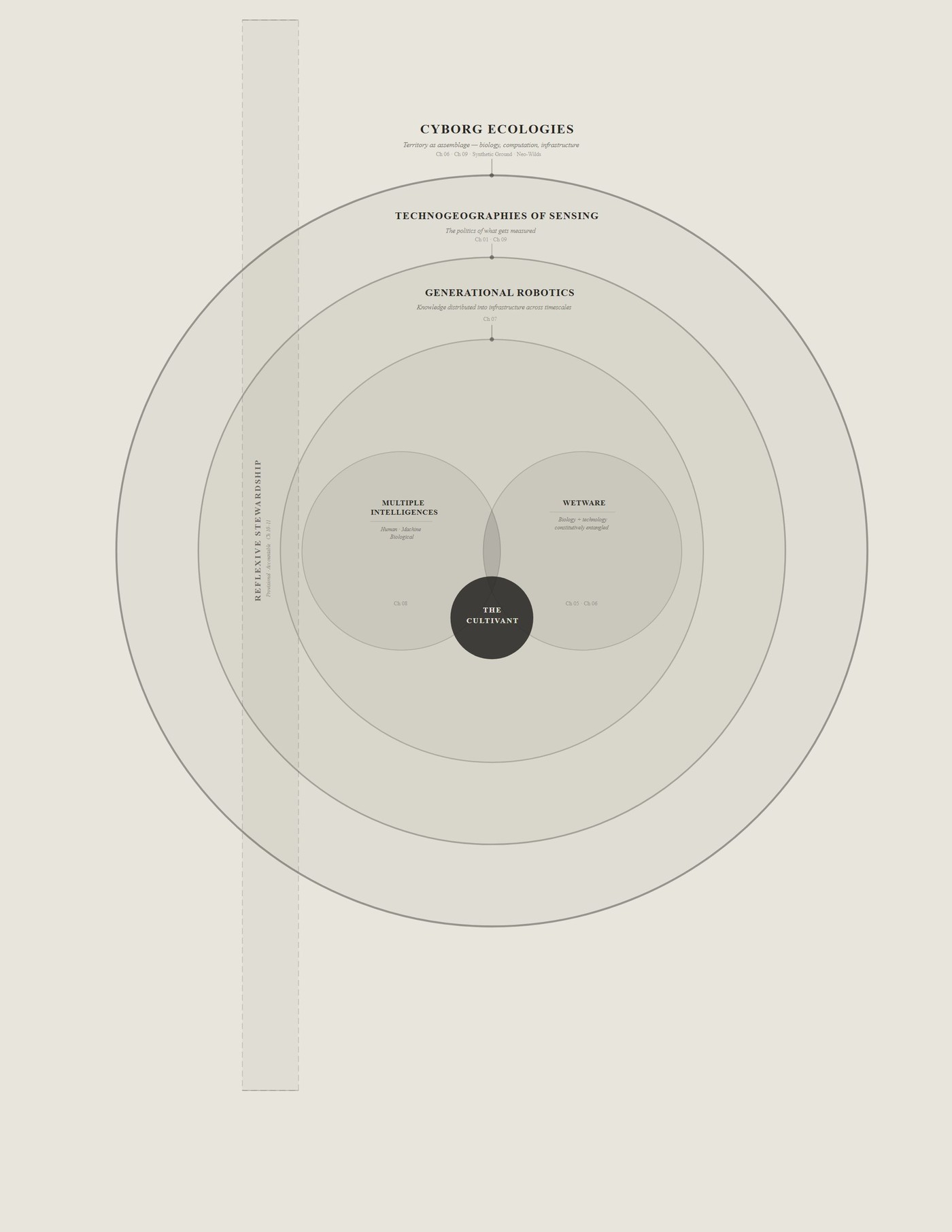
Figure 1Frameworks of Adaptive Epistemology
Six nested frameworks constituting the epistemological argument: Cyborg Ecologies, Technogeographies of Sensing, Generational Robotics, Multiple Intelligences, Wetware, and The Cultivant at the center, organized under Reflexive Stewardship.
landscape type B best
Elements of a Framework
What follows is the original contribution, the specific synthesis that twenty years of practice-based design research has produced through the method this dissertation calls refraction, developed in Chapter 3, and that no single theoretical tradition could have generated on its own. The six frameworks named below are not applications of the theories surveyed above. They are the epistemological content that emerged through the friction between those theories and a practice that kept encountering what they could not predict. The theoretical traditions provide the vocabulary for naming what the practice has been producing. They do not provide the specific synthesis that emerges from designing responsive infrastructure at territorial scales across generational timescales, with multiple nonhuman co-producers of knowledge and sensing networks that constitute the epistemic field as much as they report on it.
The six frameworks that follow are not sequential tools or a curriculum through which practice matures. They are six aspects of a single condition, six registers in which the plural character of adaptive epistemology becomes visible. The predictive tradition is singular. One model, one trajectory, one specification, one measure of success. The adaptive condition is constitutively plural. The territory holds multiple temporalities simultaneously, the geological, the hydrological, the biological, the institutional, and the coupled system through which the designer engages it holds multiple forms of intelligence simultaneously, the designer’s tacit judgment, the algorithm’s pattern recognition, the biological community’s evolutionary responsiveness, the robot’s accumulated behavioral history. Multiple ways of knowing are structurally in play, and the design task is not to resolve them into a single authoritative account but to maintain the conditions under which they remain in productive relation. Each framework names a different register in which that plurality becomes a design problem.
Multiple Intelligences
The enactivist tradition positions cognition as distributed across body-environment systems. The multiple intelligences framework developed through this practice extends that distribution across a different set of partners entirely. Human judgment, machine learning, and biological agency are three irreducibly different modes of knowing that operate simultaneously and generate knowledge in their interaction. Machine cognition, what this dissertation calls the Third Intelligence, is neither a simulation of human reasoning nor a replacement for it. It is a distinct form of knowing, computational pattern recognition operating at scales and speeds unavailable to human perception. The algorithm that detects sediment sorting patterns across 15,000 video increments is accumulating a form of attention the human observer does not have. The Spartina grass that colonizes a newly deposited sediment lobe is reading substrate conditions through its own biological instruments. The practitioner who reads both holds something that neither the algorithm nor the grass can articulate on its own. Adaptive epistemology in this practice is the methodology for holding these three knowledges in productive relation without synthesizing them into a single account, but designing the infrastructure through which their interactions generate new understanding.
An early installation made this plurality tangible. The contour line is landscape architecture’s most fundamental notation, yet it carries the unspoken claim that it represents a stable condition independent of the map. In Thresholds (2006), the isolines looked like contour lines but they were not fixed. They responded in real time to the gradient generated by a painted mural, lighting, and pedestrian movement. The contour became a hypothesis rather than a fact. It reflected decisions about thresholds, datum, sensing resolution, and representational conventions, and altering any of those decisions produced a different landscape even when the underlying terrain remained constant.
Technogeographies of Sensing
The cybernetic tradition emphasizes feedback via sensing, processing, and acting. But cybernetics assumed that what is sensed is a given and that sensors report on a pre-existing world. The technogeographic analysis in Chapter 07 shows that this is not the case, and that the instrument constitutes the phenomenon. To design a sensing infrastructure is to design the terms on which the landscape can be known. This is not relativism, the marsh is real regardless of what is measured, but what the marsh reveals depends entirely on the instruments through which it is read. And no single instrument captures what the territory is, because a territory is not a single kind of thing. When two sensors disagree, when the satellite tide gauge and the in-situ conductivity sensor produce a gap between their readings, that gap is not instrument error to be resolved through calibration. It is information about a process that neither sensor was designed to capture alone, knowledge that lives in the divergence between accounts rather than in either account separately. Choosing what to sense is the first epistemological act of adaptive design. Attending to the divergences between what different instruments reveal is the second, and it is where the plurality of the territory becomes most visible.
Wetware as Medium
Adaptive management postures ecological systems as the objects of management intervention. This practice has learned through projects truncated pruning cycles and through the landscape’s reorganization under managed water flows that biological systems are not solely objects of inquiry but active participants in generating knowledge. The plant that responds to the robot’s cuts is producing data about its own growing conditions through its own biological logic. Its response is a form of knowledge about the interface between designed intervention and biological agency, knowledge that the plant is generating on its own terms and that the designer must learn to read. Wetware is not biological infrastructure enrolled in technical systems, rather it is a knowledge producer that design must learn to read alongside the sensor networks and within the algorithms. Adaptive epistemology designed for this kind of practice must include a methodology for reading biological response as evidence and for treating plant growth, sediment colonization, and species arrival not as outcomes to be evaluated but as data that revises the next intervention.
When sensing, analysis, and construction occur simultaneously rather than sequentially, a continuous feedback loop replaces the linear process that conventional practice assumes. The divergence between these two temporal modes is itself a form of knowledge, one that becomes visible only when the apparatus is designed to sustain both at once.
Generational Robotics and Distributed Knowledge
The enactivist tradition, and Dewey’s learning-by-doing, both assume a human practitioner whose body accumulates experience across a career. Generational Robotics extends this temporal frame beyond any individual career, beyond any institutional memory, into the kind of duration that ecological succession requires. A marsh robot that has been operating for thirty years has developed knowledge of site-specific hydrological dynamics, sediment behavior, and vegetation succession through its own accumulated engagement with the territory. That knowledge is not held in any mind. It is distributed into the machinic parameters, into the database it has built, into the management protocols it has refined through iteration. Adaptive epistemology must account for this distributed, infrastructural form of knowledge and must treat the persistent machine as a knowledge system that continues learning after its designers have departed. This changes what it means for design to produce knowledge, as knowledge produced by generational infrastructure is not held by any practitioner. It is embedded in the landscape itself.
Coupled Ecologies as the Territorial Condition
Wetware names the biological medium. Coupled Ecologies names the territorial condition that results when biology, computation, and infrastructure are no longer separate domains but a single operative system. The islands and dredge channels of the Chesapeake Bay, simultaneously a living marsh, a sensor network, and an adaptive management protocol, constitute a coupled ecology. Not a natural system with a technological prosthesis, a territory in which the biological and the computational are inseparable. Adaptive epistemology must account for knowledge produced within this coupling, knowledge that is neither purely ecological nor purely computational but emerges from their ongoing interaction. The coupled ecology is not a design outcome. It is the condition within which this practice’s epistemology operates.
Reflexive Stewardship
The five frameworks above describe what adaptive epistemology involves and how it operates. Reflexive Stewardship, the sixth, names what it demands of the practitioner. The designer is not an external observer with a neutral vantage point. She is a participant whose knowledge is partial, whose position within the coupled system shapes what she can perceive, and whose decisions are part of the system’s dynamics rather than inputs from outside it. Reflexive Stewardship takes this seriously, not as a limitation to be overcome but as a structural feature of practice in plural systems.
The reflexive dimension is not introspection. It is the active cultivation of the knowledge that the practitioner’s own vantage point makes invisible. A territorial system holds forms of knowledge that the technical apparatus cannot generate and the designer’s training has not equipped her to perceive. Knowledge held in the practices of communities who have inhabited the territory across generations, in the biological community’s accumulated responsiveness to conditions the sensors have not been calibrated to measure, in the system’s own history of prior interventions. Reflexive Stewardship requires building the conditions under which these forms of knowledge enter the adaptive learning loop as formative inputs, not as consultation appended to an already-determined process but as constitutive elements of an inquiry that is plural from its inception.
This is why the goals of a project are themselves hypotheses. If adaptive epistemology locates knowledge in the coupled system rather than in the designer’s head, then the monitoring is not only a check on performance, it is a check on whether the question being asked is the right one. When the monitoring reveals that a community bears disproportionate burdens from an intervention, that is not an equity concern appended to a technical finding. It is evidence that the proposition was wrong, that the practitioner’s vantage point had made the community’s conditions invisible, that the inquiry needs to be revised at the level of its assumptions. Stewardship without reflexivity becomes management. Reflexivity without stewardship becomes critique without consequence. Together they name the condition under which knowledge worth having can be produced at all.
The ethical risks of ceding decision-making to autonomous systems are not peripheral to this argument. When the territory’s autonomy increases, human situational awareness decreases, and the relationships between human communities and their environments are restructured in ways that may not be visible to either. Reflexive Stewardship requires retaining responsibility for monitoring and intervening, even, especially, when the system operates independently.
The cultivant, developed from Raxworthy's viridic (2018) and extended to territorial scales in Chapter 11, names the disposition from which this practice is conducted, the ongoing negotiation between designed intention and biological agency in which territorial maintenance is the primary design act. The cultivant is not a seventh framework but the practitioner's posture within all six, provisional, attentive, adjusting, tending an ongoing relationship whose trajectory is influenced but not determined.
Gilbert Simondon’s philosophy of individuation provides the ontological ground for why adaptive epistemology cannot treat its instruments as fixed tools applied to passive material. For Simondon, technical objects undergo their own process of individuation, evolving through their interactions with the environments in which they operate (Simondon 1958). A sensing apparatus is not the same object after three years of deployment as it was on the day it was installed. The protocols, the calibrations, the accumulated knowledge of how the system behaves under specific conditions have individuated it into something its designers did not fully specify. What Simondon calls “technical mentality,” the capacity to understand objects through their genesis and relations rather than through their function alone, is what adaptive epistemology demands of the practitioner. The instruments, the organisms, the institutions that maintain them are not static components of a design. They are entities in the process of becoming, and the designer’s role is to attend to that becoming rather than to arrest it.
Together, these six frameworks constitute an adaptive epistemology specific to territorial landscape practice, a practice that operates with multiple nonhuman co-producers of knowledge, through sensing infrastructure that constitutes as much as it reports, across timescales that exceed human institutional memory, toward landscapes whose forms emerge through biological agency within the frame the design provides. The frameworks are not a sequence or a toolkit. They are simultaneous registers of a single plural condition, and their value is not in any individual framework’s claim but in the architecture they produce together. An account of knowledge production at territorial scale in which the territory itself participates, in which multiple forms of intelligence operate simultaneously, and in which the designer’s role is to maintain the conditions under which their productive relation continues. This is adaptive epistemology not as a borrowed framework but as a disciplinary contribution, landscape architecture’s answer to the question of how knowledge is produced when the systems being designed are more complex, more alive, and more temporally extended than any single account can hold.
The laboratory practice documented in Chapters 05 and 06 provides the evidence for this claim, knowledge generated through action, hypotheses treated as experimental conditions, understanding emerging from material friction rather than from theoretical formulation alone.
The adaptive epistemology proposed here can be understood through what Bratton (2025) calls a “Copernican trauma,” a moment when existential technology forces a fundamental reconceptualization of our position within the systems we study. Just as the telescope forced heliocentrism and computational climate modeling forced the Anthropocene concept, the six frameworks developed across this dissertation force a recognition that landscape design knowledge is not applied from outside the system but produced from within it, through distributed intelligence, material engagement, and temporal scales that exceed any individual practitioner’s career.
Bratton’s argument that computation was discovered as much as it was invented, that computation is a planetary phenomenon rather than merely a human industrial product, supports the claim that the responsive infrastructures described here are not artificial impositions on natural systems but new phases in what Bratton calls the ongoing coupling of biogenesis and technogenesis.
The image is worth holding. The lithosphere folding itself to produce forms of intelligence that deduce things about themselves. That is what a sensor-equipped marsh is. That is what a robot tending a living shoreline across decades is. The adaptive epistemology developed here does not describe this condition from outside, rather it operates from within it.
An Epistemological Reorientation
The stationarity crisis described in Chapter 01 reveals a problem that extends deeper than climate change. Complex adaptive systems exhibit emergent behaviors that cannot be predicted from knowledge of component parts, nonlinear dynamics that amplify small perturbations into large effects, and sensitivity to initial conditions that produces divergent trajectories from nearly identical starting points. Ecological systems are characterized by thresholds, tipping points, and alternative stable states that may persist for decades before suddenly collapsing. Social systems introduce reflexivity, defining the actors who respond to predictions in ways that alter the conditions being predicted. Under these circumstances, the appropriate response to uncertainty is not better prediction but better adaptation.
Wicked Problems and Design as Inquiry
Horst Rittel and Melvin Webber’s concept of “wicked problems” (1973) provides a framework for understanding why predict-and-control approaches fail in social and environmental planning. Wicked problems, unlike “tame” problems in science and engineering, have no definitive formulation, no stopping rule, no true-or-false solutions, only better or worse outcomes that cannot be tested in advance. Every wicked problem is essentially unique. Every attempted solution is a “one-shot operation” with irreversible consequences. And every wicked problem is a symptom of another problem. The planner confronting wicked problems “has no right to be wrong” unlike the scientist who can learn from failed experiments, the planner’s interventions produce real-world effects that cannot be undone.
Climate adaptation, ecosystem restoration, and territorial landscape management are paradigmatic wicked problems. There is no definitive formulation of what “successful adaptation” or “restored ecosystem” means and different stakeholders bring different values, different knowledge, and different visions of desirable futures. There is no stopping rule and conditions continue to change, and management must continue indefinitely. Solutions cannot be tested in advance, the only way to learn whether an intervention will work is to implement it and observe the results. And every intervention produces consequences that reshape the problem, a sediment diversion that builds land changes hydrological patterns, ecological communities, and stakeholder interests in ways that alter what subsequent interventions should attempt.
Rittel and Webber called for “second-generation” approaches to planning based on argumentative processes in which images of problems and solutions emerge gradually through dialogue among participants. This aligns with Judith Innes and David Booher’s framework for evaluating collaborative planning through the lens of complex adaptive systems (1999). Consensus-building processes are not merely means to producing agreements but are experiments in social learning through which shared meanings emerge and adaptive capacity is built. The process is as important as the product, perhaps more important, because the relationships, trust, and mutual understanding developed through collaboration persist as resources for navigating future uncertainties that the current agreement could not anticipate.
Evgeny Morozov’s critique of “solutionism” names what is at stake when wicked problems are treated as tame ones. Technical solutions that optimize within predefined constraints displace rather than resolve underlying conflicts, obscuring their political and historical dimensions (Morozov 2013). Adaptive epistemology is not a better solution. It is a different relationship to the problem.
Defamiliarization, the deliberate displacement of a familiar activity into an unfamiliar context, can uncover assumptions that routine practice conceals. When design methods developed for one context are deployed in another, the gap between ordinary application and new deployment reveals what the original framing had suppressed. Chapter 05 traces several such displacements across the practice documented in this dissertation.
Reflective Practice and Knowing-in-Action
Donald Schön’s concept of “reflective practice” (1983) offers a framework for understanding professional expertise that aligns with adaptive epistemology. Against the “technical rationality” that positions professional practice as the application of scientific theory to well-defined problems, Schön argued that competent practitioners navigate uncertainty, uniqueness, and value conflict through “reflection-in-action,” a kind of thinking that occurs within the midst of practice and shapes action as it unfolds. The professional’s implicit “knowing-in-action” are the tacit skills and judgments that enable competent performance without explicit deliberation and is complemented by reflection that surfaces assumptions, questions framings, and experiments with alternative approaches when situations resist routine handling.
Schön’s framework emerged from observations of architects, engineers, psychotherapists, and planners engaged in practice. Design, in this view, is a “reflective conversation with the situation” (1983, 76) in which the designer makes moves that produce effects that may surprise, requiring reframing and new moves in response. The situation “talks back,” revealing constraints and possibilities that could not have been anticipated in advance. Competent design is not the implementation of predetermined solutions but an improvised navigation through a situation that unfolds through the designer’s engagement with it.
For landscape architecture, reflective practice becomes essential under conditions where no amount of technical analysis can determine in advance what interventions will prove adequate. The “landscape as model” framework developed in Chapter 08 institutionalizes reflective practice at territorial scales, the landscape becomes the experimental apparatus through which hypotheses are tested and the situation “talks back” through distributed monitoring, responsive infrastructure, and evolving interfaces.
Stamm pushes Schön’s framework toward a more radical claim. Where Schön proposes that practitioners reflect in and on action, Stamm argues that the medium of reflection matters as much as the act. Reflection conducted through discursive concepts rather than through the medium of practice itself produces what he calls a “travesty of discourse” in which the practitioner is “lost in translation” between the material and the formal realm (Stamm 2013, 35). The cognitive yield of practice is not an insight waiting to be translated into language. It is sui generis, a form of knowledge that exists only in the work and is distorted by the very conceptual scaffolding that purports to reveal it.
This is not an argument against writing or theorization. It is an argument about the direction of epistemic authority. Stamm’s principle of “medial fidelity,” the requirement that inquiry remain in the medium of the practice rather than defaulting to discursive abstraction, does not prohibit the use of concepts. It functionalizes them as scaffolding, as transitory structures that should be made redundant through the execution of the research itself (Stamm 2013, 38). The concept does not bear the onus of insight. The work has cognitive primacy.
For this dissertation, medial fidelity means that the tools, models, sensing networks, and robotic systems documented in Chapters 05 through 10 are not illustrations of a theory developed elsewhere. They are the primary medium through which the epistemological claims are made. The written chapters provide the scaffolding that makes those claims legible to readers outside the practice, but the scaffolding is secondary to the work itself. If the frameworks developed here could only be understood through the written exegesis and not through engagement with the practice that produced them, the research would have failed on Stamm’s terms.
Charles Waldheim’s Landscape as Urbanism (2016) makes the disciplinary argument on which this epistemological reorientation depends. Waldheim contends that landscape architecture, precisely because it has always operated with living, temporal, and indeterminate media, is better positioned than architecture or urban planning to address the conditions of contemporary urbanization such as horizontal sprawl, infrastructural obsolescence, ecological disruption, and the collapse of stable planning horizons. What Waldheim frames as a disciplinary realignment, landscape supplanting architecture as the primary medium of urban order, this dissertation reframes as an epistemological one. If landscape is the discipline of indeterminacy, then its epistemology must itself be adaptive and capable of producing knowledge through engagement with systems whose behavior exceeds prediction. The six frameworks developed here supply the epistemological content that Waldheim’s disciplinary argument requires but does not itself provide. Adaptive epistemology is what landscape-as-urbanism becomes when it takes its own indeterminacy seriously not just as a design strategy but as a mode of knowing. Alexander Robinson and Brian Davis articulate the practitioner’s role that follows. The landscape architect as choreographer developing narratives, establishing interactions, and determining how feedback is incorporated, moving from the delivery of solutions to the design of interfaces through which evolving conditions can be perceived and negotiated (Robinson and Davis 2018).
Adaptive Management and Its Limits
Adaptive management, developed by C.S. Holling, Carl Walters, and their collaborators beginning in the 1970s, operationalizes aspects of this epistemological orientation for natural resource management (Holling 1978; Walters 1986). Its core insight, that management actions are themselves experiments generating information about system behavior, is foundational to this body of work. Bryan Norton and Anne Steinemann (2001) ground adaptive management in pragmatist philosophy, arguing that environmental values emerge through social inquiry rather than being given in advance. Kai Lee (1993) extends this into “civic science,” a mode of inquiry combining experimental orientation with democratic deliberation. These contributions are real and this dissertation is indebted to them. But adaptive management, as the following section argues, remains within a horizon that adaptive epistemology seeks to expand.
Practice Under Adaptive Epistemology
The distinction from adaptive management is not a matter of degree. Adaptive management proposes iterative cycles of action, monitoring, and adjustment, and that contribution is real. But its epistemological assumptions remain within the predictive paradigm. The goal of monitoring is to reduce uncertainty, to improve model accuracy, to converge toward better predictions of system behavior. Adaptive epistemology makes a different claim. It proposes that design practice is itself a mode of knowledge production, that the design proposition, built and deployed, generates categories of knowledge that cannot be produced in advance through modeling alone. The distinction is not between managing adaptively and managing statically. It is between treating knowledge as something that precedes and guides action and treating it as something produced through action. The design is not the application of prior knowledge to a site. The design is an experiment that produces the knowledge we did not yet have.
Stamm’s formulation of radical practice research clarifies what is at stake in this distinction. Practice research in its most radical form, he argues, “explores creation exclusively through creation.” The research heuristic is not a hypothesis to be verified but a “possibility to be actualized,” and to actualize a possibility is categorically distinct from verifying a hypothesis (Stamm 2013, 33). The adaptive epistemology developed here operates in exactly this register. When a sensing apparatus deployed in a wetland produces readings that diverge from the model’s predictions, the divergence is not a failed verification. It is a new possibility that has been actualized, something the territory has done that no prior hypothesis had learned to ask for. The knowledge produced is not a correction of the model. It is evidence that the territory’s adjacent possible has expanded in a direction the model could not have specified.
This distinction has practical implications that reach beyond semantics. An adaptive management framework, however iteratively it operates, still requires specifying goals before intervention, target species abundances, water quality thresholds, salinity gradients, restoration benchmarks. The monitoring is designed to measure progress toward those predetermined targets. When the system exceeds the model’s predictive capacity, adaptive management tends to respond by improving the model, incorporating the new data and recalibrating predictions.
Adaptive epistemology does not assume that better prediction is the goal. What it produces instead, and the evidence for this runs through the chapters that follow, is not improvements in predictive accuracy but shifts in what questions are revealed. A sensing apparatus that fails to resolve the morphology of a depositional layer often reveals new relationships, the territory doing something in the gap between what the instrument expected and what it found. A plant that responds to robotic pruning through a resistance within its biological logic is generating knowledge on its own terms, knowledge the designer’s hypothesis had not yet learned to ask for. Chapter 05 traces these shifts across twenty years of practice. The claim here is structural in that adaptive epistemology treats such moments as the primary site of knowledge production rather than noise that should be eliminated from the system.
This disposition can be cultivated pedagogically. When students are asked to construct representations of landscapes that do not yet exist, future coastlines, reconceived wadi systems, they must work from process logic before any empirical confirmation. The gap between proposition and precedent becomes the knowledge they need to generate design hypotheses.
Stuart Kauffman’s concept of the adjacent possible provides the structural logic for how adaptive epistemology advances. In complex systems, evolution does not leap to optimal solutions. It explores what is adjacent to what already exists, each step opening a new set of possibilities that were not available before the step was taken (Kauffman 2000). A predict-and-control paradigm attempts to leap directly to the answer, specifying the desired state and engineering toward it. Adaptive epistemology stays in the adjacent possible, allowing each intervention to reveal what the next question should be. The designer does not arrive at the territory with a solution. The designer arrives with a proposition, and the territory’s response determines what becomes available next. This is not incrementalism, it is a fundamentally different relationship to futurity, one in which the future is not predicted but produced through the accumulation of adjacent steps that no single model could have specified in advance.
The political ecology implications follow directly. If adaptive management improves prediction toward predetermined goals, then the goals themselves, what to protect, who to protect it for, what counts as ecosystem health, remain outside the epistemological loop. They are set before the monitoring begins and are not subject to revision by what the monitoring reveals. Adaptive epistemology insists that the goals themselves are hypotheses. The monitoring is not just a check on performance, it is a check on whether the question being asked is the right one.
This is why Reflexive Stewardship makes plurality a design constraint rather than an ethical supplement. If the goals of a project are hypotheses subject to revision, then what the monitoring reveals about who bears disproportionate burdens is not merely an equity concern appended to a technical process. It is evidence that the hypothesis was wrong, that the proposition was not producing the knowledge or the landscape conditions it claimed to be producing. The revision demanded is not cosmetic. It is fundamental.
The distinction matters beyond the academy because the alternative is already underway and accelerating. Adaptive management enhanced with machine learning, optimization algorithms, and real-time sensing is being deployed across coastal, fluvial, and urban systems worldwide. If the epistemological assumptions of predict-and-control remain embedded in that deployment, if the goal of monitoring is still to reduce uncertainty toward better prediction rather than to receive what the territory is producing on its own terms, then the computational enhancement does not change the paradigm. It makes the paradigm faster. The territory’s capacity to surprise, the divergence between instrument readings where the most valuable knowledge lives, is filtered out as noise rather than followed as signal. Adaptive epistemology is not an improvement on this trajectory. It is a departure from it.
Design as Cultural Practice
While adaptive epistemology emphasizes provisionality and responsiveness, design under this framework does not abandon form-making. Landscape architecture is a cultural practice. Gardens, parks, and designed landscapes are cultural artifacts that embody values, aspirations, and ways of relating to the world. Elizabeth Meyer’s argument for “sustaining beauty” (2008) insists that aesthetic experience is not a superficial addition to ecological function but a primary means through which landscapes communicate and persuade. The designer operating under adaptive epistemology does not stop composing. The composition changes its relationship to time.
This creates a genuine tension that the dissertation does not fully resolve. Adaptive epistemology treats every intervention as provisional, subject to revision by what the monitoring reveals. Yet designers must make decisions that fix form, at least temporarily. Every planting plan, every grading scheme, every infrastructure alignment is a commitment that forecloses some futures while enabling others. The question is not whether to commit but how to commit in ways that remain revisable, that anticipate the need for adjustment, that hold open the possibility of learning from what the commitment produces. How this provisionality can coexist with the cultural weight that designed landscapes carry, as monuments, as places of meaning, as sites of collective memory, remains an open question, one that the discipline will need to navigate as adaptive methods become more central to practice.
The neo-wild landscapes that emerge from the framework developed in this dissertation, computationally managed territories that appear wild while being intensively monitored and maintained, are cultural artifacts of a particular kind. They express a relationship to nature characterized by orchestration rather than control, by attention rather than mastery. They are not formless. They are forms that hold becoming, designed infrastructure that establishes conditions within which appearances, processes, and ecologies develop according to logics that include but exceed the designer’s intentions.
This reframes the relationship between adaptive epistemology and design authorship. The designer is not the sole author of the landscape, other agents contribute, biological, computational, geological, social, and the design is never finished in the conventional sense. But the designer’s intentionality is not diminished. It is redirected from specifying outcomes to calibrating conditions, from composing objects to composing the terms on which objects emerge and change.
The computational work developed in Codify (2018) illustrates this reframing. A rule such as “Place a Populus deltoides wherever soil moisture exceeds 40% and slope is less than 5 degrees” is not a specification but a hypothesis. When the algorithm runs against actual site data, the territory tests the proposition. If the resulting planting concentrates trees in places the designer’s intuition would not select, the territory reveals a relationship the designer had not fully understood. If the plan produces ecologically absurd concentrations, the territory shows the rule is underspecified or missing variables. In either case the algorithm provides knowledge about the hypothesis rather than confirming a specification. Computational thinking about landscape, in this frame, is adaptive epistemology operationalized in code.
Machine Intelligence and Distributed Knowledge
The distributed intelligence framework developed in Chapter 11 positions machine learning algorithms not as tools that execute human intentions but as active participants in knowledge production. Machine intelligence extends adaptive epistemology by enabling learning at scales and speeds beyond human cognitive capacity, detecting correlations across thousands of sensor streams that no human observer could perceive. Yet it also introduces epistemic challenges. Algorithms are not transparent, and the recommendations they generate may be correct without being understood.
Agüera y Arcas (2025) proposes that prediction is fundamental to all life, rivers predict sediment paths, forests predict seasonal cycles, wetlands predict flood thresholds. The machine intelligence deployed in this dissertation’s responsive infrastructures is not imposing novel logic on passive nature. It is making visible and shareable the predictive processes that landscapes have always performed. Bach (2009; Bach and Sorensen 2025) extends this by proposing that mind itself is substrate-independent information processing, capable of exceeding the specifications of the system that generated it. When a system produces an output that its initial conditions did not specify, it is generating knowledge through its own process of becoming, knowledge that belongs to the coupling rather than to any designer. Chapter 11 develops this argument in full.
The responsive infrastructures described throughout this dissertation are epistemological apparatus, systems that produce knowledge through their engagement with landscapes. What sensors measure determines what can be known, what algorithms optimize determines what is valued, what interfaces display determines what is visible. The design of responsive infrastructure is therefore a form of epistemological politics. Choices about what to monitor, what to optimize, and what to display are choices about what matters and whose knowledge counts.
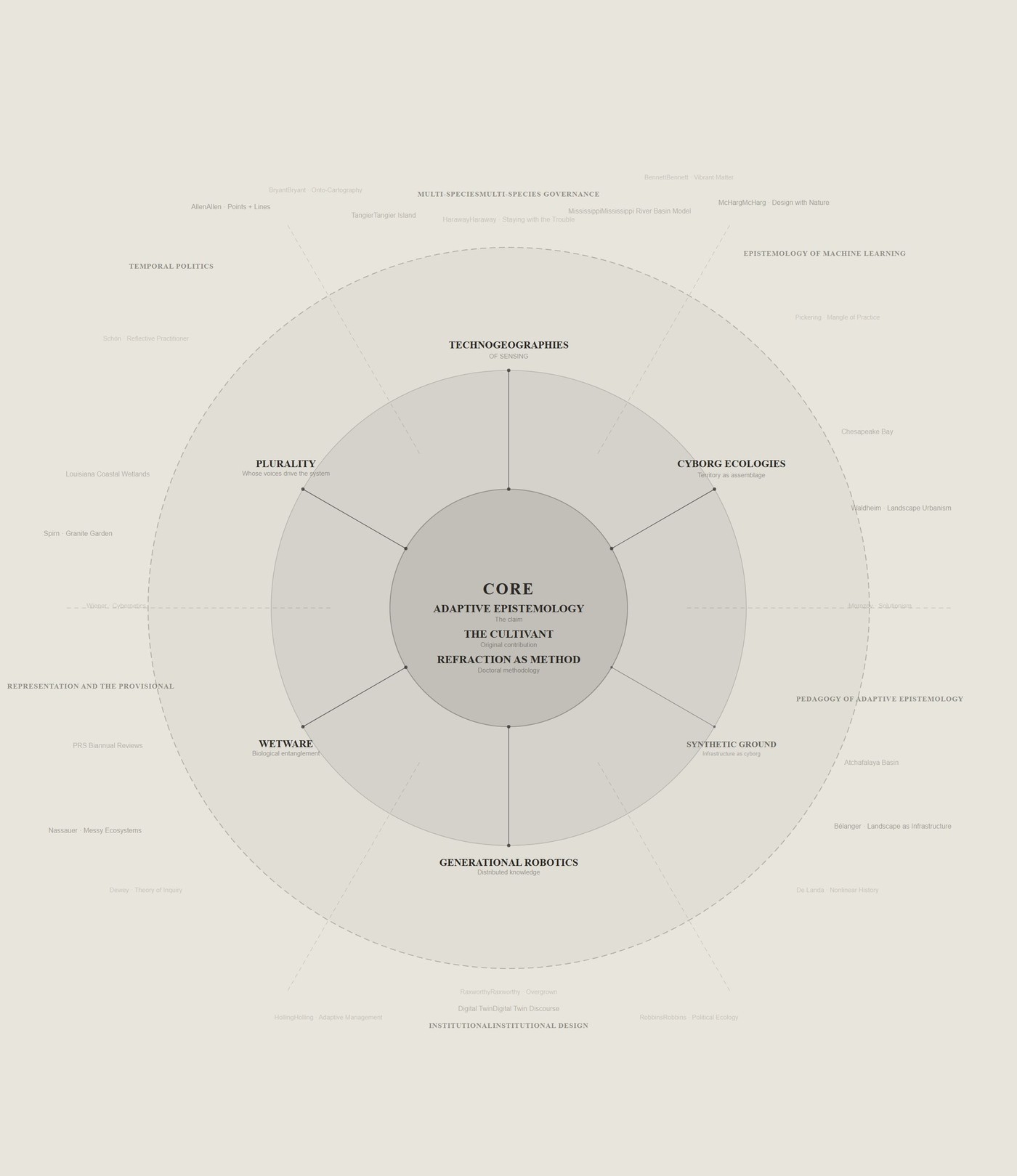
Figure 2Core, Collateral, and Scaffolding
The intellectual architecture of the dissertation. Core: what the PhD is for — Adaptive Epistemology, The Cultivant, Refraction as Method. Collateral: what can be extended. Scaffolding: what can be left behind.
Adaptive Epistemology in Practice
The Structural Incompatibility
The theoretical elegance of adaptive epistemology confronts substantial obstacles when translated into the institutional realities of professional landscape architecture practice. The discipline’s organizational structures, contractual frameworks, liability regimes, and business models have evolved around assumptions fundamentally incompatible with adaptive approaches, that projects have definable scopes, fixed deliverables, determinable endpoints, and attributable outcomes. A practice premised on ongoing learning, provisional knowledge, and emergent outcomes does not fit neatly into professional structures designed for the delivery of completed works.
These incompatibilities are not superficial inconveniences but structural barriers embedded in the legal, economic, and institutional systems through which landscape architecture operates. Addressing them requires not merely adjustments to individual project approaches but transformations in how the profession conceives of its services, structures its relationships with clients and collaborators, and positions itself within broader systems of environmental governance. The difficulty of this transformation should not be underestimated, nor should its necessity, if landscape architecture is to remain relevant to the territorial challenges of climate adaptation, ecological restoration, and infrastructure resilience that define contemporary environmental practice.
The NEOM consultation (2022–25) provides the most direct evidence that adaptive epistemology is not a theoretical preference but a practical necessity. When GeoHECRAS modeling revealed that conventional channelization of the wadis surrounding The Line would require infrastructure widths exceeding 200 meters with hardened concrete at velocities incompatible with ecological function, the conventional predict-and-control framework had produced a solution that was technically achievable but ecologically, economically, and socially impossible. The adaptive alternative, reconceiving the wadis as holding areas, recharging aquifers, managing a fluctuating coastal isohaline zone, emerged not from a preference for adaptive methods but from the demonstrated failure of the only alternative. The landscape’s own dynamics created the opening for adaptive practice, not the other way around.
The implementation of adaptive epistemology in professional practice confronts substantial structural barriers, in liability frameworks, financing models, business structures, regulatory systems, and professional culture, that Chapter 12 addresses in detail. These barriers are real, they are embedded in the legal, economic, and institutional systems through which landscape architecture operates, and they will not yield to theoretical argument alone. But they are also navigable, as specific project moments in this research program have demonstrated.
Uncertainty as Resource
Adaptive epistemology does not eliminate uncertainty but transforms the relationship between design practice and the indeterminacies it must navigate. Rather than treating uncertainty as an obstacle to be overcome through better data and more sophisticated models, adaptive epistemology treats uncertainty as a permanent condition that practice must learn to inhabit. Rather than positioning the designer as expert who possesses the knowledge required to solve problems, adaptive epistemology positions the designer as learner who participates in ongoing inquiry alongside human and nonhuman collaborators. Rather than conceiving design as the specification of fixed forms to be built and maintained in perpetuity, adaptive epistemology conceives design as the orchestration of evolving processes that unfold across generational timescales.
This reorientation is not a retreat from rigor but a different conception of what rigor means. Adaptive design is rigorous in its attention to evidence, its systematic approach to hypothesis testing, its commitment to detecting and learning from failure, and its transparency about uncertainty and the limits of knowledge. It is rigorous precisely because it acknowledges that knowledge is provisional, that systems are complex, and that the future cannot be reliably predicted and it develops methods appropriate to these conditions rather than methods that assume away the challenges they pose.
Projects documented in Chapter 05 embody this reorientation materially. Drawing processes in which each layer can be erased or overlaid, where the work’s current state records the accumulation of decisions rather than presenting a predetermined future. Installations whose curtailed operation revealed what sustaining an autonomous feedback loop actually requires. Not only hardware but institutional infrastructure, maintenance protocols, calibration schedules, resource commitments. In each case, the gap between the proposition and what the practice encountered was itself knowledge about the full scope of what adaptive design demands.
For landscape architecture confronting climate change, ecological degradation, and socio-political volatility, adaptive epistemology offers not merely new methods but a different relationship to the uncertainties that define contemporary practice. The territorial landscapes described throughout this dissertation, the deltas, coastlines, and wetlands that must be managed under conditions of radical uncertainty require approaches that previous generations of designers could not have imagined. They require responsive infrastructures that adjust to changing conditions, distributed intelligences that detect patterns beyond human perception, and adaptive governance frameworks that sustain learning across generational timescales.
This is not a diminished vision of landscape architecture’s potential but an expanded one. The designer who embraces adaptive epistemology participates in processes that extend far beyond the conventional project, engaging with systems that unfold over decades and centuries, that involve organisms, materials, and machines as active collaborators, and that produce landscapes whose forms could not have been predicted at the outset. These are landscapes of emergence, of surprise, of becoming, shaped by the interaction of designed infrastructure and biological agency rather than by specification alone. They are landscapes adequate to the challenges of the Anthropocene and landscapes designed not for a world that no longer exists but for worlds that are still coming into being. They are not designed for stability. They are designed to learn, and the discipline that produces them must learn to evaluate them on those terms.
These are landscapes of emergence, of surprise, of becoming. They are landscapes adequate to the challenges of the Anthropocene and landscapes designed not for a world that no longer exists but for worlds that are still coming into being.
What follows is the evidence. Chapter 03 establishes refraction as the methodological practice through which this framework became legible. Chapter 04 maps the ecology of collaboration within which the research was produced. Chapter 05 traces twenty years of practice through four phases, from representation to operation to codification to autonomy, demonstrating the epistemological shifts that only the long view across projects could reveal.
Chapters 06 through 11 develop the six frameworks through the projects and territories that generated them. Chapter 06 traces the history of fluvial modeling and the departure from prediction that the practice’s physical models enact. Chapter 07 examines the plurality of sensing and the neo-wilds that emerge where technogeographic coverage meets its own limits. Chapter 08 proposes the landscape itself as a computational medium. Chapter 09 develops the shifting model of interactions through Wetware and Coupled Ecologies. Chapter 10 asks what it means to design robots that persist across generations. Chapter 11 challenges the anthropocentrism of intelligence and proposes multi-species authorship as a structural condition of practice.
Chapter 12 gathers the argument into a synoptic view. Chapter 13 names the vectors forward. Six openings into territory the frameworks make accessible but do not map, each carrying a genuine difficulty and a genuine possibility. The epistemology has been named. The territory is doing what it does in the conditions it finds. What remains is the practice that holds them in relation.